London:
Nationwide:


25,000+
Floors Restored

27 Years Experience

Wood Flooring Association Certified
Wood Stripping VS Wood Sanding: Which is the Best Option for You?
Posted on June 14, 2023
Wood Floor Restorations News
Wood Stripping vs. Wood Sanding: A Comprehensive Guide | DIY Wood Refurbishing
When it comes to refurbishing your wooden furniture or floors, two popular methods come to mind: wood stripping and wood floor sanding. Both techniques have their pros and cons and are best suited for different scenarios. This blog post aims to elucidate the differences between these two methods, so you can make an informed decision about which one is right for your project.Understanding Wood Stripping
What is wood stripping?
Wood stripping involves applying a chemical stripper to remove the old finish from a piece of wood. The stripper breaks down the finish, allowing you to scrape it off easily.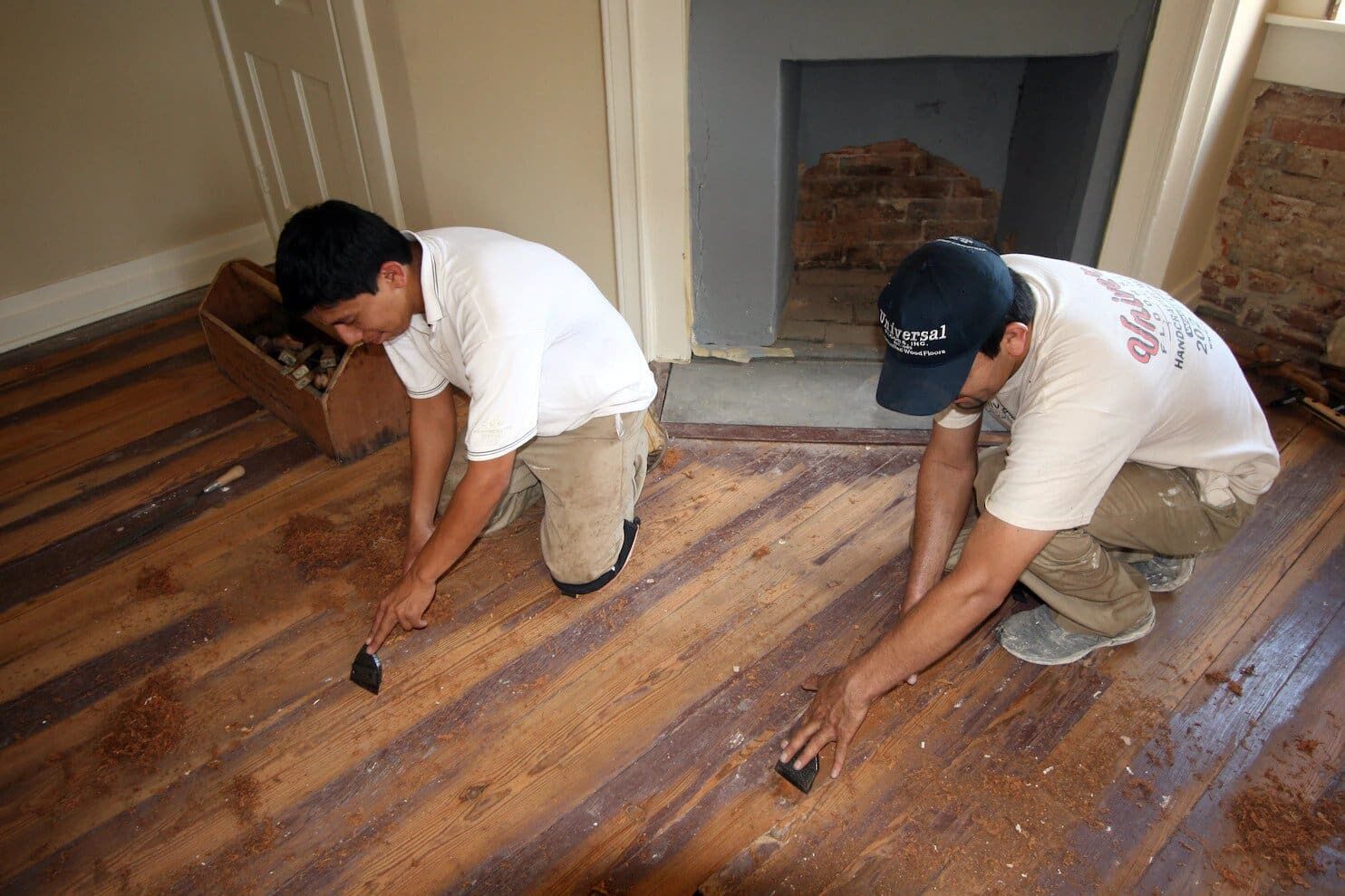
Pros of Wood Stripping
- Preserves Detail: Wood stripping is ideal for intricate pieces with carved details, as it can reach into crevices where sandpaper can’t.
- Less labor-intensive: Compared to sanding, stripping involves less physical effort.
Cons of Wood Stripping
- Chemical Safety: Strippers can be hazardous. Always use it in a well-ventilated area and use proper safety equipment.
- Time-consuming: Stripping takes longer than sanding as you need to wait for the chemicals to work.
Understanding wood sanding
What is wood sanding?
Wood sanding involves using sandpaper to remove the old finish. This can be done by hand or with a power tool like a sander.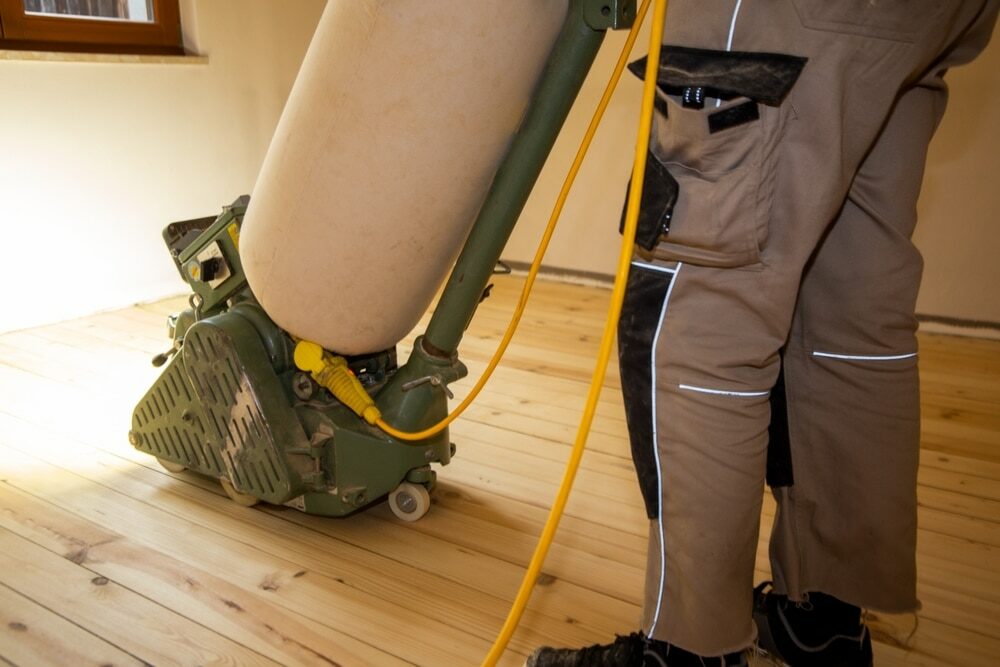
Pros of Wood Sanding
- Quick and Efficient: Sanding is typically faster than stripping, especially when dealing with flat surfaces and larger areas.
- Smooth Surface: Sanding leaves the wood smooth and ready for a new finish.
Cons of Wood Sanding
- Labour-Intensive: Sanding can be physically demanding, especially for large projects.
- Difficult on Detailed Pieces: It’s hard to reach into crevices or detailed areas with sandpaper or a sander.
Wood Stripping vs. Wood Sanding: Making the Choice
Evaluate your project.
When deciding between wood stripping and wood floor sanding, consider the size, detail level, and type of wood of your project. For large, flat surfaces, sanding is usually the best option. For smaller, more detailed pieces, stripping might be a better choice.Consider your health and safety.
Think about the safety implications. If you have respiratory issues or are sensitive to strong chemicals, sanding might be a safer option. Always use proper safety gear, regardless of the method you choose.Assess your skills and comfort level.
Consider your comfort level with each method. If you’re new to DIY projects, you might find stripping less intimidating than handling power tools for sanding.Practical Tips for Wood Stripping and Sanding
Regardless of the method you choose, here are some practical tips to help you succeed.Tips for wood stripping
- Safety First: Always wear gloves, a respirator mask, and protective eyewear.
- Use a Plastic Scraper: To avoid damaging the wood, use a plastic scraper to remove the loosened finish.
- Neutralise the Stripper: After scraping off the old finish, use a stripper neutralizer to stop the chemical reaction.
Tips for Wood Sanding
- Choose the Right Grit: Start with coarse sandpaper and gradually switch to finer grits for a smooth finish.
- Sand with the grain: Always sand in the direction of the wood grain to avoid scratches.
- Use a Sanding Block: For hand sanding, use a sanding block to ensure even pressure.
Conclusion
Both wood stripping and wood floor sanding have their place in the world of DIY woodworking. The key is to understand the nature of your project and select the method that best suits your needs and comfort level. With patience, safety, and the right approach, either method can yield stunning results. Remember, the goal is to give your wooden pieces a new lease on life, so enjoy the process!Some Useful Links:
- Floor Sanding Services
- School Floor Sanding
- Wood Floor Restorations
- Wood Floor Repairs
- Wood Floor Polishing
More from our Blog:
How to Use a Drum Sander – Hints and Tips Sanding Wooden Floors – A Comprehensive DIY Guide for Beginners Unveiling the Secrets of Successful Floor Sanding Avoid Common Mistakes When Sanding Hardwood Floors Using a Drum Floor Sander – Why and How? | Mr Sander®


Sanding
We provide virtually dust-free sanding with our continuous belt machinery with mobile extraction units, giving you a safer environment for your family.

Oiling
This organic finish not only adds beauty to your home but also has exceptional water-repellent characteristics, making it easier to clean and maintain.

Waxing
This natural floor finish offers the softest and most mellow appearance – and leaves your floor able to breath.

Buffing
Using soft buffing machines (and hand-polishing where required) will bring a wonderful sheen to your newly-finished floor.

Repairs
We offer a full assessment of your wooden floors to determine what repairs are needed to provide the perfect working surface for the later stages of sanding, staining and sealing.

Restoration
We offer a comprehensive restoration process designed to address floors that are improperly fitted or damaged over time through wear and tear.
Request a fixed price quote for your wood floor restoration now
Simply enter your postcode below to get started.






Services
Wood Floor Sanding Wood Floor Restoration Wood Floor Scratch Repair Squeaky Wood Floor Repair Parquet Floor Sanding Parquet Floor Restoration Commercial Floor Sanding Church Floor Sanding Community Centre Floor Sanding School Floor Sanding Gap Filling Gap Filling with ResinCopyright © Mr Sander®
Privacy & Cookies Terms & Conditions Complaints Procedure Cancellation Rights Sitemap

Get An Instant Price Estimate Before You Go…
Simply enter the rooms you need sanded and we’ll provide you with a price estimate instantly! Try our price calculator now.
Get a Price Estimate NowLocal Floor Sanding Experts
Over 500 5-Star Reviews
Safe, Dust Free Sanding
Operating Since 1994