London:
Nationwide:


25,000+
Floors Restored

27 Years Experience

Wood Flooring Association Certified
Parquet Floor Sanding
VIEW PRICING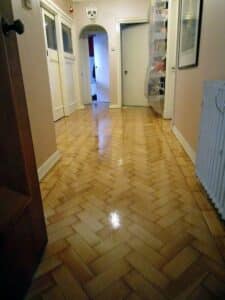
Parquet Floor Sanding Services
At Mr Sander®, we specialize in breathing new life into your cherished parquet floors. Parquet flooring, with its intricate patterns and timeless charm, has graced the most elegant of spaces for centuries. Our mission is to preserve this elegance through expert sanding services that rejuvenate your flooring and protect its heritage and beauty. We understand that parquet is more than just flooring; it’s a mosaic of craftsmanship and history under your feet. Our team, armed with the finest tools and a passion for perfection, stands ready to restore the splendor of your parquet floors, ensuring they continue to enhance the character and warmth of your home or business.
Why Need for Your Parquet Floor Sanding?
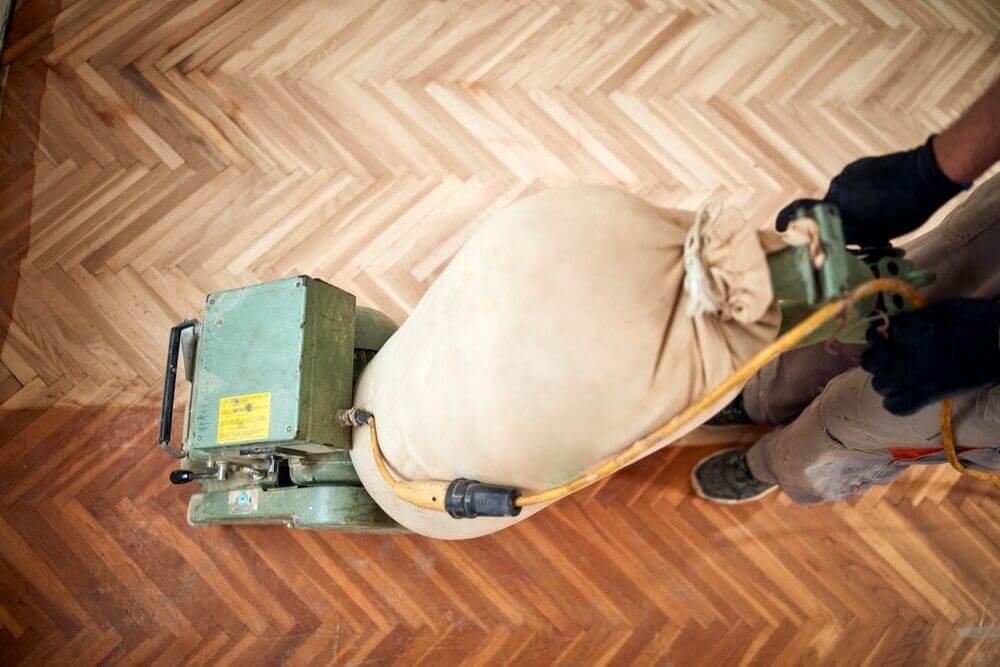
Parquet floor sanding is not just a maintenance task; it’s a crucial service that breathes new life into your flooring while preserving its unique character and history. Here are several compelling reasons why sanding your parquet floor is necessary:
- Restoration of Beauty: Over time, parquet floors lose their original luster due to wear, sunlight exposure, and spills. Sanding removes the top damaged layer, revealing the untouched wood beneath, ready to be refinished and polished.
- Longevity and Durability: Regular sanding extends the life of your parquet flooring. By removing surface imperfections, scratches, and dents, it strengthens the wood and prevents further damage.
- Enhancing Value: Well-maintained parquet floors significantly enhance the value of your property. They are a desirable feature for potential buyers or renters, symbolizing luxury and quality.
- Health and Hygiene: Sanding eliminates accumulated dirt, dust, and allergens trapped in the wood grain and between the tiles, promoting a healthier living environment.
- Preparation for Refinishing: Sanding is a preparatory step for refinishing. It creates a smooth, even surface necessary for applying stains, sealants, or varnishes, ensuring a uniform and high-quality finish.
- Customization Opportunities: Sanding opens up possibilities for customization. You can choose a new stain or finish to update the look of your floor in line with current trends or your personal aesthetic preferences.
- Addressing Unevenness and Damage: Over the years, wood can warp or get damaged. Sanding helps in leveling the floor and fixing minor damages, ensuring a flat, stable surface.
- Cost-Effective Renovation: Compared to replacing your entire flooring, sanding is a cost-effective way to revamp your space. It gives you almost the same effect as installing new flooring but at a fraction of the cost.
Our Parquet Floor Sanding Process
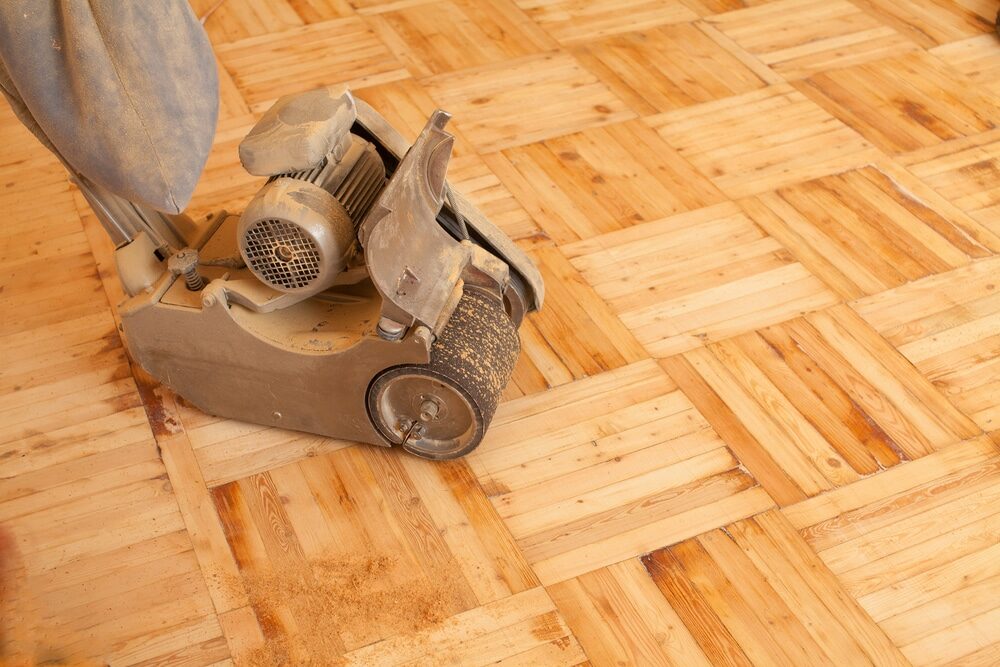
At Mr Sander®, our Parquet Floor Sanding Process is meticulously crafted to ensure the highest quality of care for your cherished floors. We take pride in our detailed and systematic approach, which involves several key steps:
- Initial Inspection and Consultation: Our process begins with a thorough assessment of your parquet flooring. We evaluate the condition of the wood, identify any damage or wear, and discuss your vision and expectations for the final result. This step ensures that our service is tailored to your floor’s specific needs.
- Preparation and Repairs: Before sanding, we prepare the area to protect your home or business. Furniture is moved, and protective measures are put in place to minimize dust and debris. We then address any necessary repairs, such as replacing damaged wood or securing loose planks, to ensure a smooth and stable surface for sanding.
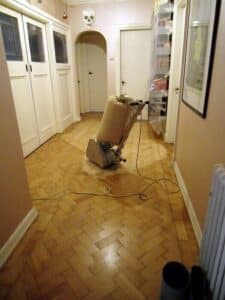
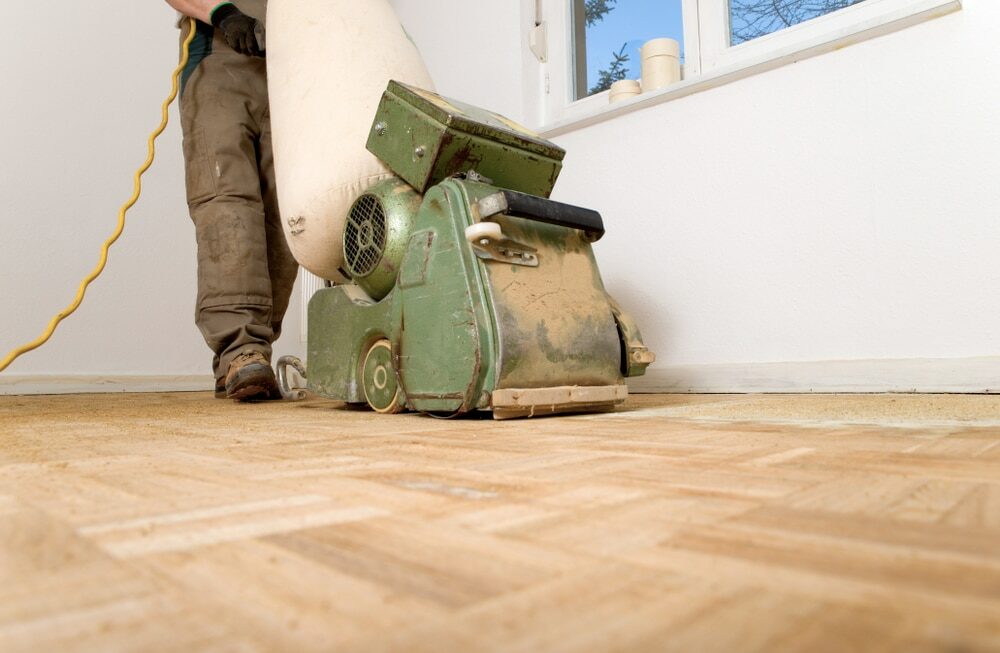
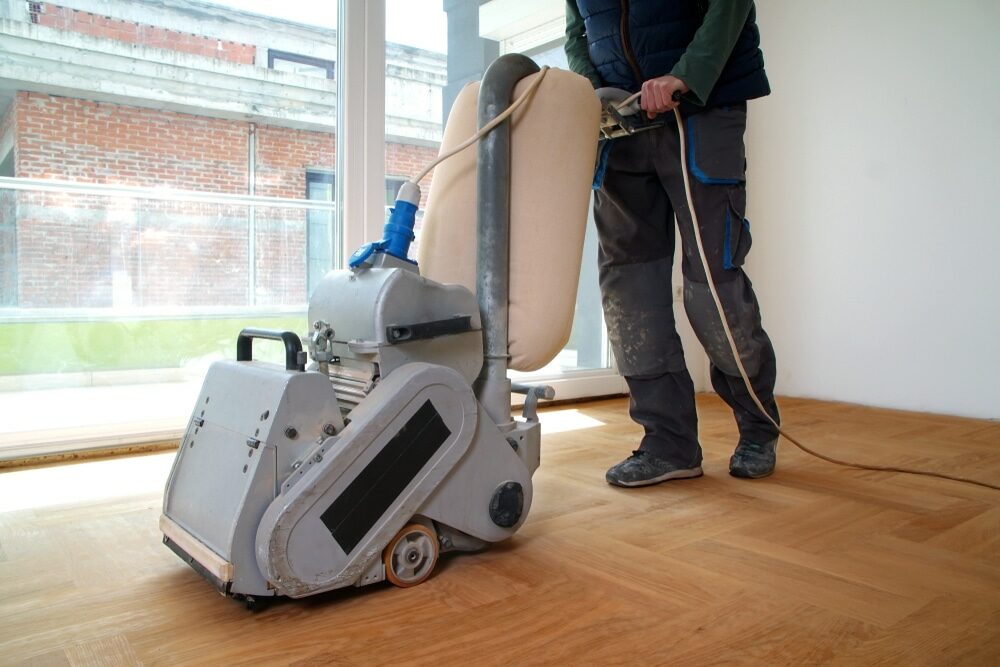
- Sanding Process: Utilizing advanced sanding equipment, our skilled technicians carefully remove the old finish and smooth out the surface of your parquet floors. We use progressively finer grades of sandpaper to achieve a flawless finish. Our machines are designed to minimize dust, keeping your space clean and healthy.
- Detailing and Fine Sanding: Special attention is given to the details. Edges and corners are meticulously sanded by hand to ensure uniformity and to reach areas where machines can’t. This step is crucial for maintaining the integrity of the parquet patterns.
- Cleaning and Final Inspection: Post-sanding, we thoroughly clean the area, removing all dust and particles. A final inspection is conducted to ensure every inch of your floor meets our high standards.
- Finishing Touches: We offer a variety of finishing options, including stains, oils, and varnishes. Our team will guide you in choosing the best finish that not only enhances the beauty of your parquet but also provides long-lasting protection.
- Quality Check and Customer Walkthrough: After the finishing application, we conduct a comprehensive quality check. We then invite you to a walkthrough to ensure your complete satisfaction with the work.
We Also Sand All Types of Floors
- Pine floorboards
- Cork
- Granwood
- Engineered wood flooring
- Solid Wood Floors
- Bamboo
Why Choose Our Services
- Unmatched Expertise and Experience: Our team comprises highly skilled professionals who specialize in parquet floor sanding. With years of experience in the industry, we bring a depth of knowledge and expertise that ensures top-quality results.
- Customized Approach: We recognize that every parquet floor is unique. Our services are tailored to the specific needs of your flooring, taking into account its age, pattern, wood type, and your personal preferences. This customized approach ensures that your floors receive the care they deserve.
- State-of-the-Art Equipment: We utilize the latest in sanding technology, which is designed to be efficient and minimize dust. This not only ensures a cleaner process but also a higher-quality finish.
- Dedication to Quality: From the initial inspection to the final walkthrough, every step of our process is executed with an uncompromising commitment to quality. We are not satisfied until our clients are delighted with the outcome.
- Eco-Friendly and Safe Practices: We are committed to using environmentally friendly products and safe practices. Our sanding process is designed to be as dust-free as possible, ensuring a healthier environment for you and your family.
- Transparent and Competitive Pricing: We believe in honesty and transparency in our pricing. Our quotes are comprehensive, with no hidden costs, ensuring that you receive the best value for high-quality services.
- Exceptional Customer Service: Our team is not just skilled in floor sanding but also in customer service. We understand the value of your time and strive to complete projects efficiently without disrupting your daily routine.
- Aftercare Support and Advice: Our service doesn’t end with the sanding and finishing of your floors. We provide aftercare support and advice on how to maintain and care for your parquet floors, ensuring their beauty lasts for years.
Our services cater to residential, business, and industrial clients.
- Residential Clients: We understand that your home is your sanctuary, and our residential parquet sanding services are tailored to enhance the beauty and comfort of your living spaces. We handle everything from classic homes with historical flooring to modern apartments seeking a touch of elegance. Our team ensures a smooth, efficient process with minimal disruption to your daily life.
- Business Clients: First impressions matter in business, and a well-maintained parquet floor can significantly enhance the appearance of your commercial space. Our services for businesses include offices, retail spaces, restaurants, and more. We work around your business hours to minimize any impact on your operations, ensuring a beautifully finished floor that reflects your company’s professionalism and attention to detail.
- Industrial Clients: Industrial spaces often have unique requirements due to the scale and usage of the flooring. Our industrial parquet floor sanding services are designed to handle large areas efficiently, ensuring durability and resilience even in high-traffic areas. We use robust finishing products that can withstand the rigors of industrial environments, providing a long-lasting, attractive finish.
No matter the size or scope of your project, Mr Sander® is equipped to deliver exceptional results. Our comprehensive approach includes assessing the specific challenges and requirements of each site, and ensuring a customized solution that meets your needs. We place a strong emphasis on quality, efficiency, and customer satisfaction across all our client categories, ensuring that your parquet floors look stunning and stand the test of time.
Ready to Revitalize Your Parquet Floors?
Transforming your parquet floors from worn to wonderful? Call Us Now! At Mr Sander®, we’re eager to bring our expertise and passion for parquet floor sanding to your doorstep. Whether you’re looking to refresh the floors in your home, elevate your business space, or revamp an industrial area, our team is ready to deliver outstanding results.
Check out our amazing customer reviews…

Chris and Christina
August 2023

Jeff Jones
August 2023

Rocco DeLuca
July 2023

Sanding
We provide virtually dust-free sanding with our continuous belt machinery with mobile extraction units, giving you a safer environment for your family.

Oiling
This organic finish not only adds beauty to your home but also has exceptional water-repellent characteristics, making it easier to clean and maintain.

Waxing
This natural floor finish offers the softest and most mellow appearance – and leaves your floor able to breath.

Buffing
Using soft buffing machines (and hand-polishing where required) will bring a wonderful sheen to your newly-finished floor.

Repairs
We offer a full assessment of your wooden floors to determine what repairs are needed to provide the perfect working surface for the later stages of sanding, staining and sealing.

Restoration
We offer a comprehensive restoration process designed to address floors that are improperly fitted or damaged over time through wear and tear.
Request a fixed price quote for your wood floor restoration now
Simply enter your postcode below to get started.






Services
Wood Floor Sanding Wood Floor Restoration Wood Floor Scratch Repair Squeaky Wood Floor Repair Parquet Floor Sanding Parquet Floor Restoration Commercial Floor Sanding Church Floor Sanding Community Centre Floor Sanding School Floor Sanding Gap Filling Gap Filling with ResinCopyright © Mr Sander®
Privacy & Cookies Terms & Conditions Complaints Procedure Cancellation Rights Sitemap

Get An Instant Price Estimate Before You Go…
Simply enter the rooms you need sanded and we’ll provide you with a price estimate instantly! Try our price calculator now.
Get a Price Estimate NowLocal Floor Sanding Experts
Over 500 5-Star Reviews
Safe, Dust Free Sanding
Operating Since 1994