
London: 020 7381 9408

Nationwide: 0800 955 8585

Floors Restored
25,000+
Floors Restored
Experience
31 Years
Experience
Association Certified
Wood Flooring
Association Certified
Get a Free Quote
Refinishing Parquet Flooring completed: high-gloss herringbone parquet with rich, dark tones and mirror reflection in a finished living room.

Parquet Floor Refinishing: Step-by-Step Guide + Costs

Posted on October 22, 2025

Floor Sanding Articles

Parquet Floor Refinishing before and after: worn mosaic blocks sanded, gap-filled and sealed to a warm, glossy finish in a bright living room.Refinishing Parquet Flooring.

Refinishing Parquet Flooring (2025 Guide): Costs, Process & Pro Tips

Parquet is the geometry teacher of timber floors: tidy lines, sharp angles, quietly beautiful when everything’s in order—and a bit unforgiving when it isn’t. If your herringbone or mosaic parquet has dulled, gapped or gone patchy, refinishing can return that crisp, gallery-grade look without the cost or disruption of a full replacement. This 2025 guide pulls together realistic UK costs, a step-by-step process, finish options, timelines and floor maintenance tips—plus some behavioural-economics nudges to help you make smart choices you won’t regret.

Parquet Floor Refinishing progress: mosaic parquet sanding, resin gap-filling with trowel, and final lacquer coat in hallway for a rich, even sheen.Refinishing Parquet Flooring.


TL;DR (but do read the details)

  • Typical UK cost (2025): £35–£55 per m² for sand & seal on sound parquet; add £6–£12 per m² for staining; +10–20% for intricate patterns/hardwoods; repairs extra.
  • Timeframe: 1–3 working days for most rooms; finishes cure fully in 3–7 days depending on product.
  • Best finishes: Water-based lacquers for durability and fast cure; hardwax oils for a soft, repairable, natural look.
  • DIY or Pro? DIY is possible but easy to mar on parquet; a pro’s dust extraction, pattern-savvy and finishing technique matter more than on plank floors.
  • Pro tip: Choose matt or satin for a modern, forgiving look; gloss amplifies every imperfection.

Why refinish parquet (instead of replacing it)?

  • Value over cost: Refinishing is usually a fraction of replacement—and preserves the historic charm many buyers love.
  • Sustainability: Keeping existing blocks out of landfill and avoiding new timber is the greener move.
  • Aesthetic: Parquet’s geometry pops when edges are crisp and the sheen is uniform. Refinishing restores contrast and depth you didn’t know you’d lost.
  • Longevity: A correct sand and finish buys you 7–10+ years before the next light refresh (often just a screen and re-coat).

Behavioural nudge: Replacement feels decisive; refinishing is quietly clever. The smartest money is often spent on maintenance that looks invisible because it simply looks right.

Parquet Floor Refinishing before and after: herringbone parquet in a bright garden room sanded, gap-filled and sealed to a rich satin-gloss finish.Refinishing Parquet Flooring.


What affects the cost in 2025?

Prices vary by region, access, and specification, but the main drivers are predictable. Below are realistic UK-market ranges to help you budget.

1) Size & layout

  • Larger rooms lower the per-m² rate; tight hallways and rooms with many cut-ins, fireplaces or built-ins push costs up.

2) Pattern & species

  • Herringbone / chevron / Versailles: expect +10–20% compared with simple mosaics.
  • Hardwoods (oak, maple, merbau) can be slower to cut and finish than softwoods; exotics may need special primers.

3) Condition & repairs

  • Loose blocks: £5–£15 per block to lift, clean, and re-bed (more if many are affected).
  • Subfloor issues: Bitumen residues, moisture or uneven screeds add time and materials.
  • Gap filling: Resin slurry is usually included; timber slivers add £15–£25 per linear metre in problem areas.

4) Finish system & sheen

  • Water-based lacquer (2K / traffic-grade): Durable, fast cure, low odour. Material cost is higher but labour is efficient.
  • Hardwax oil: Lovely feel, spot-repair friendly; more porous, needs periodic refresh.
  • Stain colour: Adds a day/visit and £6–£12 per m² for products and extra labour.

5) Access & protection

  • Upper floors without lift, parking constraints, or required weekend work can add surcharges.
A promotional image by Mr Sander® comparing the costs of replacing versus renovating a herringbone parquet floor. The left side shows a worn-out herringbone parquet floor with a cost of £5250 to replace, marked with a red 'X'. The right side displays the same floor after a complete renovation, costing £1500, marked with a green check. Text highlights that renovating is 3.5 times cheaper and faster than replacing. The image includes a 'Call Us Now' button for immediate contact, emphasizing the significant cost savings and efficiency of floor renovation over replacement.


Example price scenarios (illustrative)

Space & scopeDetailsEstimated range
Small hallway (6 m²)Mosaic parquet, sand + 3 coats pro-grade water lacquer£280–£380
Typical lounge (16 m²)Herringbone oak, minor gap fill, sand + stain + 3 coats lacquer£900–£1,150
Through lounge/diner (28 m²)Herringbone, repairs to 20 blocks, stain, 3 coats lacquer£1,700–£2,100
Flat (45 m²)Mixed rooms, light repairs, 3 coats hardwax oil (no stain)£1,900–£2,400

These figures assume standard site conditions and good access. If your parquet has widespread de-bonding, moisture issues or significant levelling needs, get an in-person survey.


How long does refinishing take?

  • Day 1: Prep, repairs, coarse and medium sanding, pattern edge-work, first sealer/coat.
  • Day 2: Fine sanding/screening, stain (if specified), 1–2 finish coats.
  • Day 3 (if needed): Final coat and de-masking.

Walk-on times:

  • Water-based lacquer: light sock traffic after 3–6 hours; careful furniture after 24–48 hours; rugs after 7 days.
  • Hardwax oil: light traffic after 12–24 hours; full cure 3–7 days (product dependent).
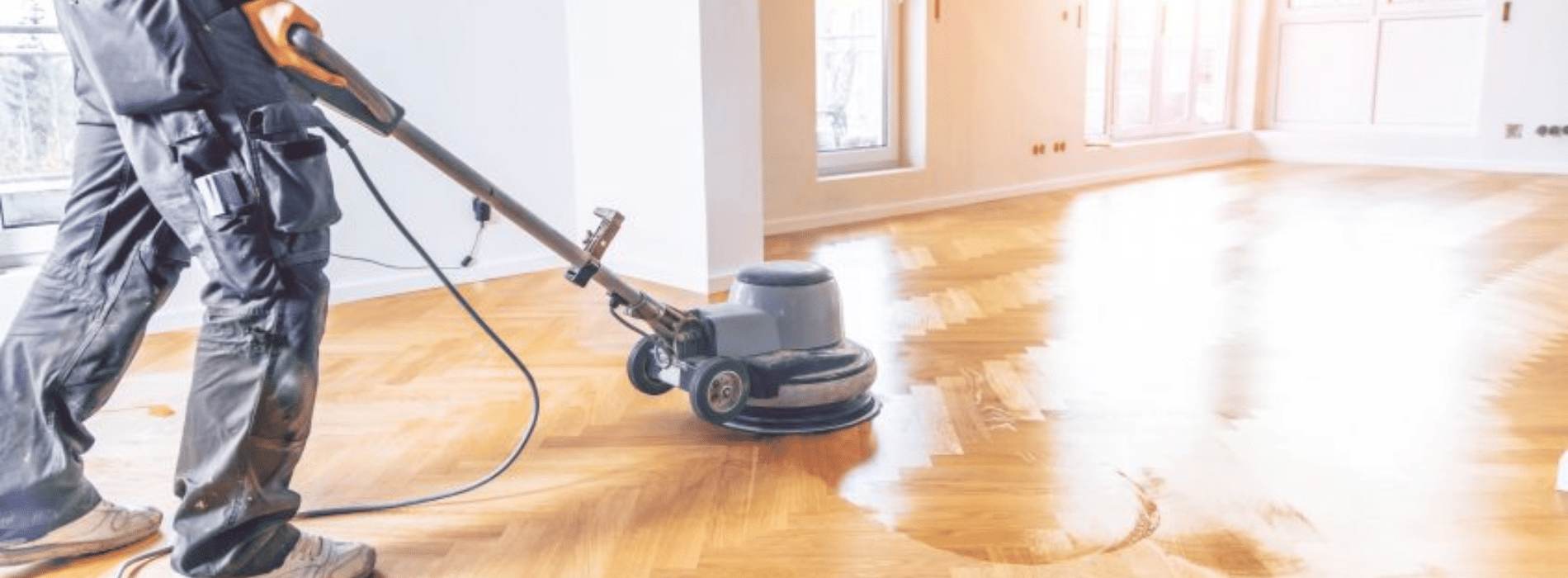
Parquet Floor Refinishing progress: herringbone parquet sanded, stained and sealed with multiple coats to a deep, mirror-like gloss. Refinishing Parquet Flooring.


Tools and materials (DIY checklist)

  • Machines: Drum/belt sander (or planetary for parquet), edge sander, detail sander, buffer/screen.
  • Abrasives: Coarse (24–36), medium (40–60), fine (80–120) grits; mesh screens (120–150).
  • Fillers: Solvent or water-based resin + fine dust for slurry; or pre-made parquet slivers.
  • Finishes:
    • Water-based lacquer (single- or two-component; traffic grade for busy homes).
    • Hardwax oil (clear or tinted).
    • Optional primer/sealer compatible with your finish.
  • Stains: Water or oil-based; test for colour and compatibility.
  • Consumables: Tack cloths, microfibre rollers and trays, high-quality brushes, masking, sheeting.
  • Safety: P3 dust mask/respirator, hearing protection, eye protection, gloves.
  • Dust management: Industrial extraction if possible. (Consumer vacs clog quickly.)

Safety note: Many pre-1960s subfloors contain bitumen adhesives; some old coatings may contain lead. Avoid sanding unknown finishes without proper PPE and extraction. If in doubt, consult a professional.

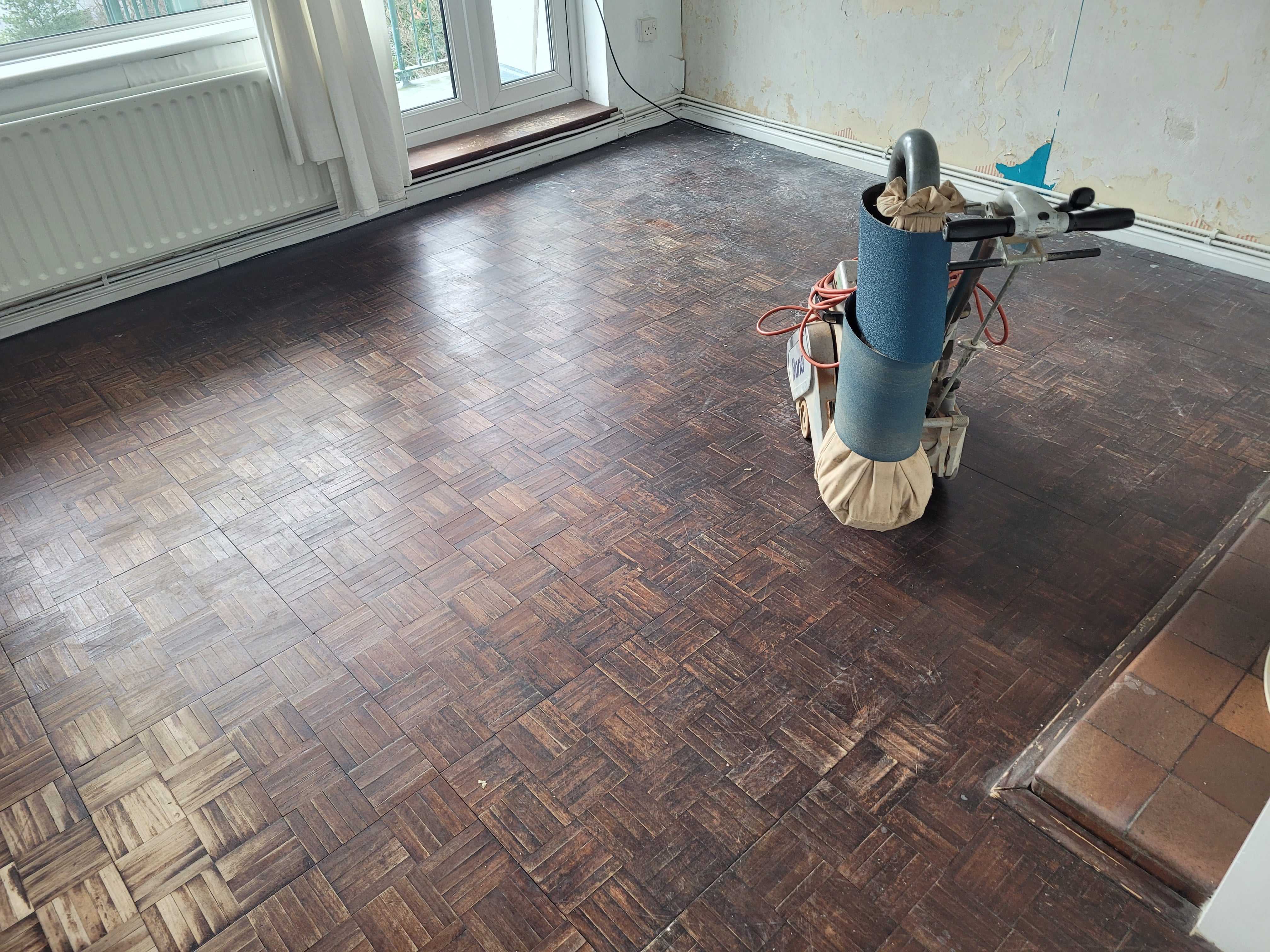
Parquet Floor Refinishing prep stage: worn mosaic parquet hallway with sanding equipment and materials set out before restoration.


The refinishing process (step-by-step)

1) Inspection & moisture checks

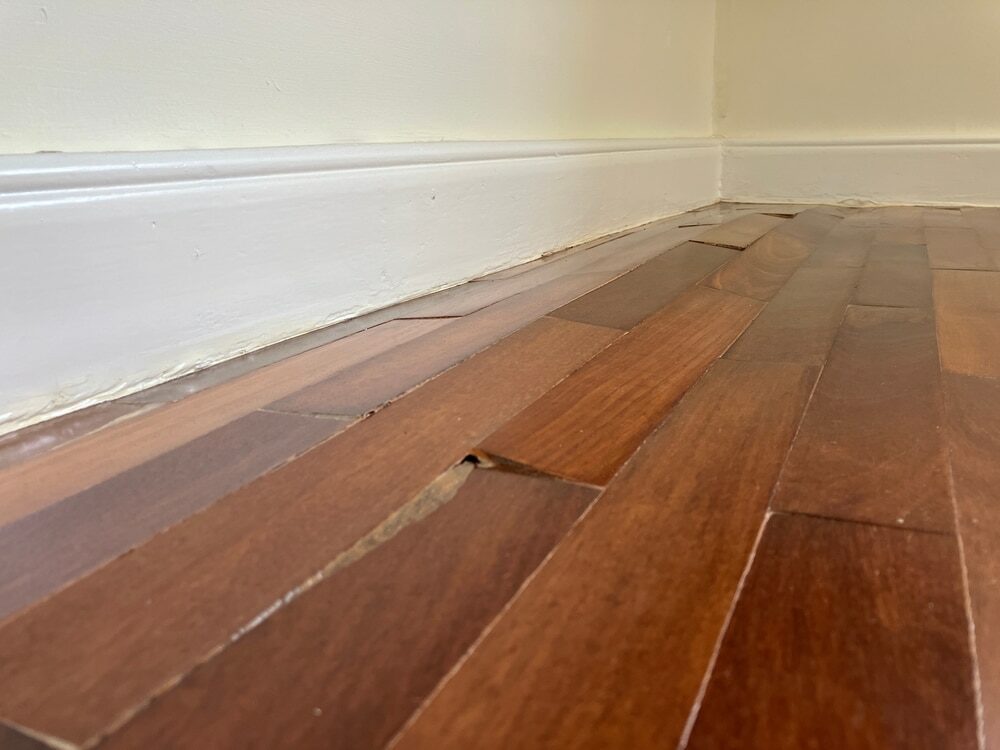
Check for loose blocks (hollow sounds), cupping, gaps, pet stains, and prior coatings. Measure moisture in both blocks and subfloor. Persistent damp must be addressed first.

2) Repairs & rebedding

Lift loose blocks, scrape off bitumen, apply modern adhesive compatible with wood and subfloors (often MS polymer), and weight until set. Replace missing blocks with matching species and dimensions; orient correctly to preserve the pattern.

3) Gap filling

  • Resin slurry method: Mix fine sanding dust with resin and trowel over the floor. Quick and tidy, ideal for hairline gaps.
  • Timber slivers: Best for larger, consistent gaps; glue in, trim flush once set.

4) Sanding strategy for parquet

Parquet requires a gentler, cross-grain-friendly approach than plank floors.

  • Coarse cut: Start with 36–40 grit, sanding at ~7–15° to the grain orientation and alternating directions to avoid scalloping the blocks.
  • Edge work: Keep the perimeter consistent with the field; avoid digging lines perpendicular to the pattern.
  • Intermediate cut: 60–80 grit to remove coarse scratches and flatten slight lipping between blocks.
  • Fine cut / screening: 100–120 grit or mesh to refine the surface for finishing.
  • Detailing: Corners, thresholds, under radiators with a detail sander or hand-scrape.

Pro tip: Don’t “chase” every micro-low with coarse grit; you’ll introduce wave. Aim for even scratch patterns and flatness, not endless depth.

5) Dust removal

Vacuum methodically (edges first, then field), wipe with microfibres, and allow settling time before finishing. Dust is the enemy of clear coats.

6) Colouring (optional)

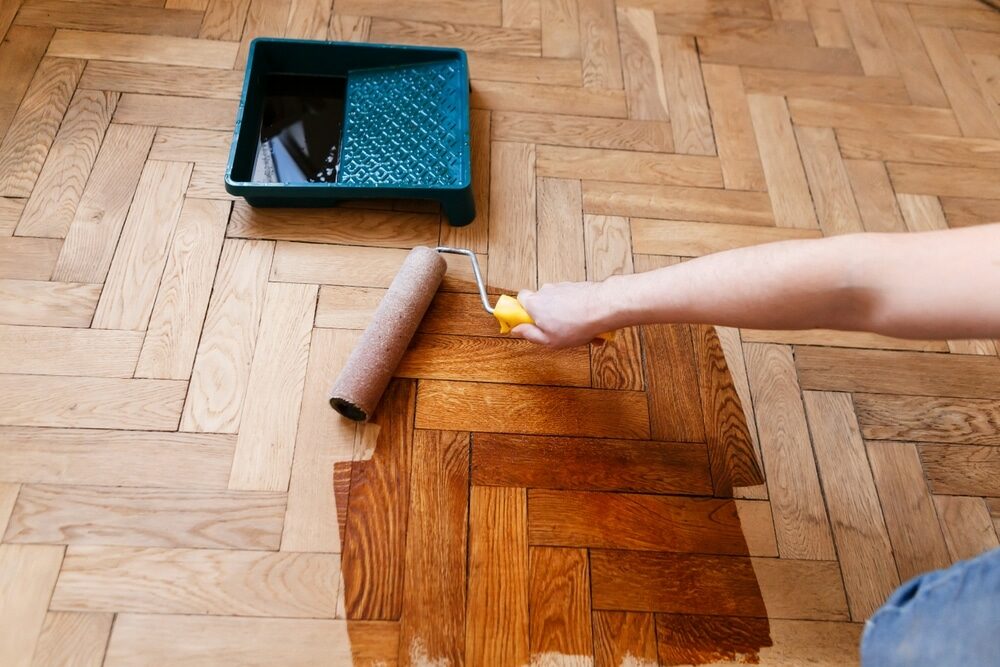
Apply stain evenly, working small sections with a brush/pad and wiping off the excess along the pattern lines. Keep a wet edge and back-wipe to avoid lap marks. Let thoroughly dry before sealing. Always test a sample board or a discreet area first.

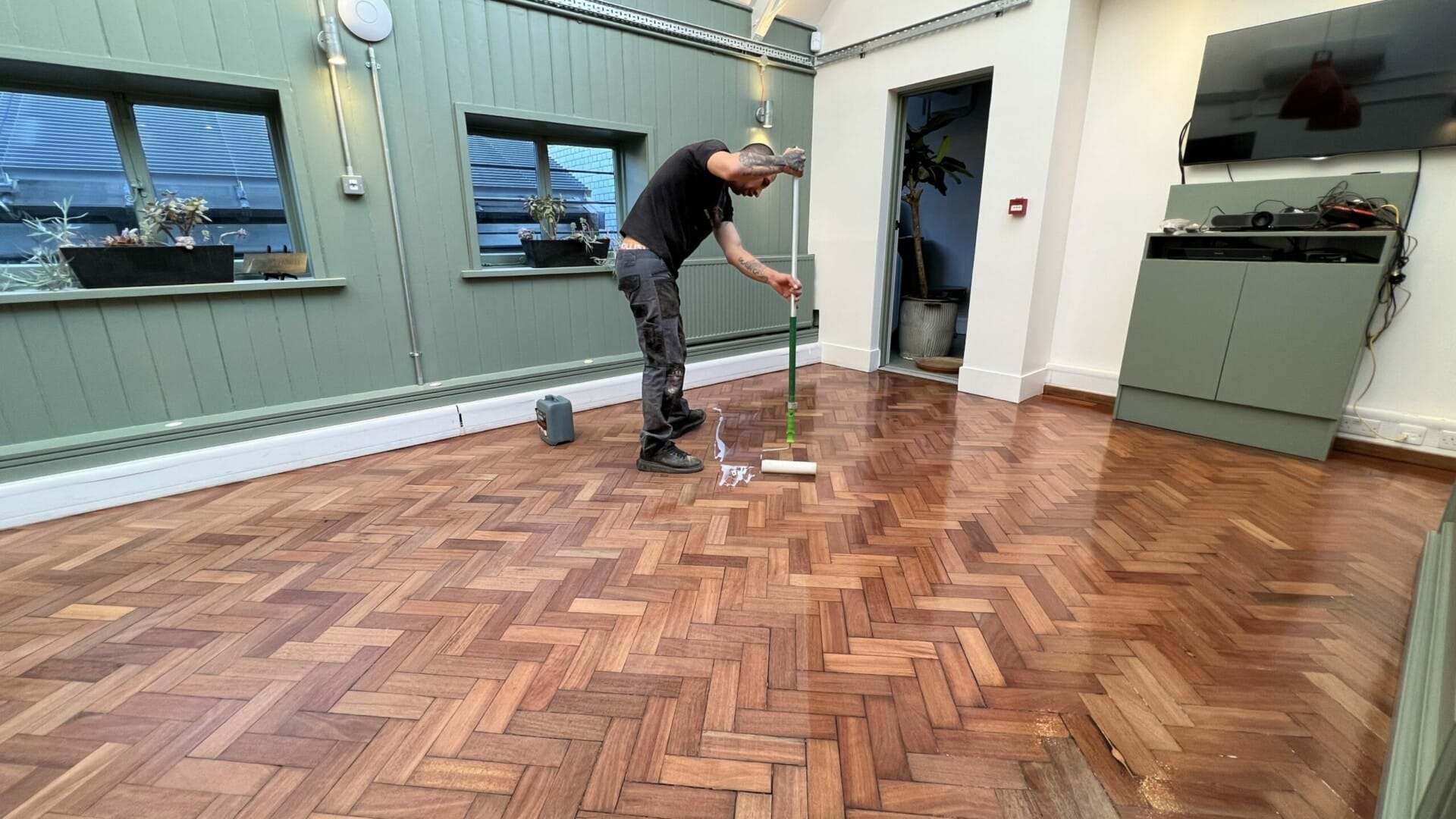
7) Sealing & topcoats

  • Primers/sealers reduce grain raise and block tannin bleed (helpful on reactive species like oak).
  • Water-based lacquers: Typically 1 sealer + 2 topcoats (or 3 coats total for traffic areas). Lightly denib between coats (150–180 mesh).
  • Hardwax oil: Usually 2 thin coats; the second only once the first has dried to the manufacturer’s spec. Thin coats cure better than heavy ones.

8) Final buff & cure

A gentle buff after full cure removes micro nibs and leaves a silkier feel (lacquer). Re-install skirtings/thresholds once coatings are hard enough to handle.

Wood Floor Restoration sequence on oak finger-block parquet (hardwood): sanding, replacing damaged blocks, and applying finish for a uniform sheen.


Finish options compared

Water-based lacquer (single- or two-component)

  • Pros: Tough, fast cure, low odour, great clarity, excellent for busy households and rentals.
  • Cons: Harder to spot-repair invisibly; needs good intercoat prep.
  • Best for: Families, pets, heavy traffic, those who want set-and-forget durability.

Hardwax oil

  • Pros: Natural look and feel, easy local repairs, beautiful on oak; less plasticky.
  • Cons: Needs periodic maintenance oil; slower initial cure; more sensitive to standing water.
  • Best for: Homeowners who value repairability and a warm, natural aesthetic.

Acid-catalysed / solvent systems (Swedish/2K poly)

  • Pros: Very tough.
  • Cons: Strong odour/solvents; not ideal in tight UK homes; environmental and health considerations.
  • Best for: Commercial or specialist contexts; most homes are better served by modern water-based 2K lacquers.

Sheen guide: Matt hides micro-defects and looks modern; satin adds a gentle lift; gloss shows everything (great in ballrooms, merciless in hallways).

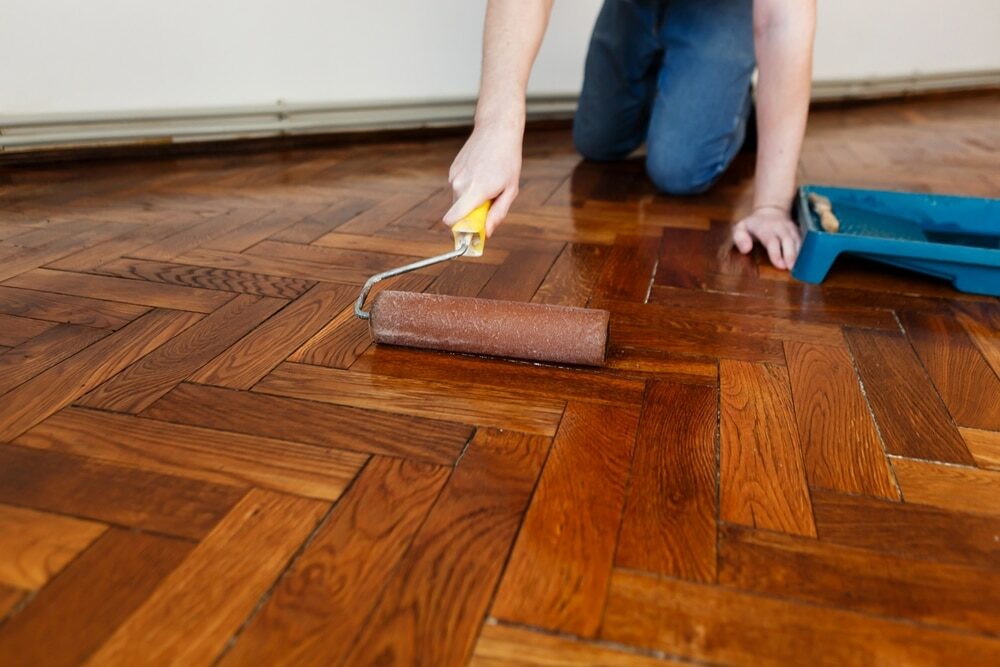
Close‑up of a hand using a wide brush to apply oil or stain to a herringbone parquet floor during professional finishing.


Colour choices that flatter parquet

Parquet’s geometry responds well to subtle contrast rather than heavy opacity.

  • Classic oak lift: A neutral water-based lacquer keeps natural tones and crisp linework.
  • Warm heritage: Light ambering oils or pale fumed looks add depth to old-stock oak.
  • Contemporary cool: Desaturated greys and taupes can look stunning, but test for grain hazing; darker stains emphasise every sanding swirl.
  • Deep tones: Walnut-like browns give museum drama but require flawless prep and diligent cleaning.

Avoid: DIY ammonia fuming or reactive stains without experience—uneven uptake on mixed-era parquet is a recipe for patchiness.


DIY vs professional: an honest comparison

When DIY can work

  • Small rooms or hallways in sound condition.
  • You’re comfortable with machines and patient with prep.
  • You accept that first-time results may be “good” rather than “perfect.”

When to hire a pro

  • Herringbone/chevron patterns (pattern integrity matters).
  • Significant repairs, loose blocks, or old bitumen residues.
  • You want fast turnaround, low dust, and a show-home finish.

Behavioural nudge: The costlier mistake isn’t “overpaying” for a pro; it’s sanding through a veneer edge, mis-staining a pattern, or trapping swirl marks under gloss you’ll see every day.

A three-image collage showing key steps in parquet floor sanding and refinishing: an industrial sander removing old finishes, a worker repairing damaged planks with a hammer and chisel, and a finishing coat being applied to the newly sanded surface.


Common mistakes (and how to dodge them)

  1. Over-aggressive coarse sanding on parquet: creates washboarding across block edges.
    • Fix: Use appropriate grits and angles; don’t linger.
  2. Skipping grits: fine scratches appear after finishing.
    • Fix: Follow a consistent grit progression; inspect under raking light.
  3. Poor dust control: nibs and pips in the finish.
    • Fix: Vacuum between passes; let dust settle; use proper extraction.
  4. Stain lap marks: especially visible on herringbone points.
    • Fix: Work small sections; maintain a wet edge; wipe consistently along pattern lines.
  5. Wrong finish for lifestyle: oil in a dog-heavy kitchen or glossy lacquer in a gritty hallway.
    • Fix: Match product to traffic, pets and cleaning habits.
  6. Rushing cure times: dragging furniture across semi-cured finishes.
    • Fix: Respect manufacturer schedules; use felt pads; add rugs after full cure.
  7. Ignoring moisture: rebedded blocks re-lift.
    • Fix: Address damp first; use appropriate adhesives/primers.

Care & maintenance after refinishing

  • First week: Light traffic, soft soles, no wet mopping, rugs after full cure.
  • Cleaning routine:
    • Dry dust with microfibre or a soft-head vacuum.
    • Damp clean with a wood-safe cleaner (pH-neutral). Avoid steam.
  • Protect: Felt pads on furniture, mats at entrances, lift not drag.
  • Refresh cycles:
    • Lacquer: A “screen and re-coat” every 3–7 years in busy spaces keeps the film healthy.
    • Hardwax oil: Clean and apply a maintenance oil when traffic lanes look dry (often annually in busy homes).
  • Sunlight: Use blinds/rugs to limit UV shading; rotate rugs periodically.
Young bakery worker wearing headphones sweeps a parquet floor installed for bakeries, showing easy-clean wood blocks after service.


Frequently asked questions (2025)

How many times can parquet be sanded?
Solid parquet (8–22 mm) can be sanded multiple times; engineered blocks with a 3–6 mm wear layer are good for 1–3 full sands. The key is judicious sanding rather than grinding.

Will refinishing remove pet stains?
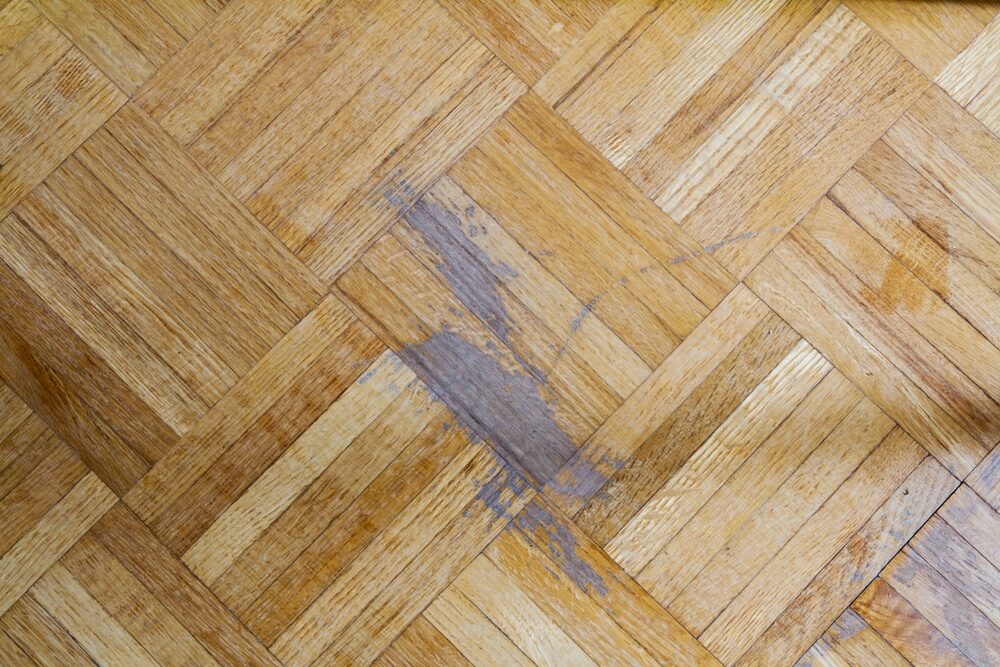
Surface marks usually disappear; deep blackening from iron/urine reactions may persist. Oxalic acid can reduce some spots, or you may replace stained blocks.

Can I live at home during the work?
Usually, yes—water-based systems are low odour and quick-curing. Plan a “floor-free” route or do the home in phases.

Do I need to remove skirting boards?
Not typically. Pros will under-cut door linings and finish to the skirtings for a tidy line. If skirtings are being replaced for décor reasons, schedule that after refinishing.

Which rooms benefit most?
Hallways and lounges show the biggest visual upgrade: restored sheen and crisp geometry transform first impressions.

FAQ concept shown with wooden letter cubes on a dark background


A straightforward specification you can hand to a contractor

  • Scope: Sand and refinish existing [pattern] parquet; repair loose/missing blocks; gap-fill as needed.
  • Preparation: Rebed loose blocks with MS polymer adhesive; moisture test subfloor and blocks.
  • Sanding: 36/40 → 60 → 80/100 on field and edges; detail sander to corners; final screen 120–150 mesh.
  • Filling: Resin-dust slurry across field; timber slivers for gaps >3 mm.
  • Colour (optional): [Stain name/tone]; on-site sample approved before full application.
  • Finish:
    • Option A: 1 x water-based sealer + 2 x 2K traffic-grade lacquer, matt/satin.
    • Option B: 2 x hardwax oil, thin coats, matt/satin.
  • Cure/hand-back: Light foot traffic after X hours; furniture after Y hours; rugs after 7 days; care pack supplied (pads + cleaner).
  • Warranty: [X] months workmanship; product per manufacturer.

Having this spec reduces ambiguity and allows apples-to-apples quotes.


Budgeting tips that actually help

  • Decide sheen first. It guides product choice and expectations.
  • Fix the big-impact repairs. A handful of rebedded blocks near doorways affects perceived quality more than microscopic scratches in a corner.
  • Skip the stain unless you’re sure. Natural oak with a quality matt lacquer looks expensive without the risk of colour disappointment.
  • Phase your project. Do the hallway and lounge first; bedrooms later.
  • Ask about a screen-and-recoat plan. It’s the cheapest way to keep parquet looking freshly finished for years.

The subtle psychology of a great parquet finish

Shiny things catch the eye, but calm, even matt or low-satin finishes make spaces feel larger and more considered. Parquet is picture-framing for the room; the job of refinishing is to give you a clean frame that doesn’t shout. In other words: choose the finish you stop noticing after a week—because that’s the one that will quietly make you happiest for the next decade.


Final thought

Refinishing parquet isn’t just maintenance; it’s restoration of intent. The craft that laid those blocks—one by one—deserves a finish that shows the pattern at its best. Whether you go pro or carefully DIY, follow the process, choose a finish that suits your life, and protect it with simple habits. You’ll get that crisp geometry back—the kind that makes visitors say, “Wow, your floors look incredible,” without quite knowing why.

Parquet Floor Refinishing completed: high-gloss herringbone parquet with rich, dark tones and mirror reflection in a finished living room.


Mr Sander
Floor Sanding Service

Sanding

We provide virtually dust-free sanding with our continuous belt machinery with mobile extraction units, giving you a safer environment for your family.

Floor Oiling Service

Oiling

This organic finish not only adds beauty to your home but also has exceptional water-repellent characteristics, making it easier to clean and maintain.

Floor Waxing Service

Waxing

This natural floor finish offers the softest and most mellow appearance – and leaves your floor able to breath.

Floor Buffing Service

Buffing

Using soft buffing machines (and hand-polishing where required) will bring a wonderful sheen to your newly-finished floor.

Wood Floor Repairs

Repairs

We offer a full assessment of your wooden floors to determine what repairs are needed to provide the perfect working surface for the later stages of sanding, staining and sealing. 

Floor Restoration Service

Restoration

We offer a comprehensive restoration process designed to address floors that are improperly fitted or damaged over time through wear and tear.

Mr Sander Professional Advantage

Simply enter your postcode below to get started.

Mr Sander

We’ve restored over 25,000 floors!

Get a Free Quote