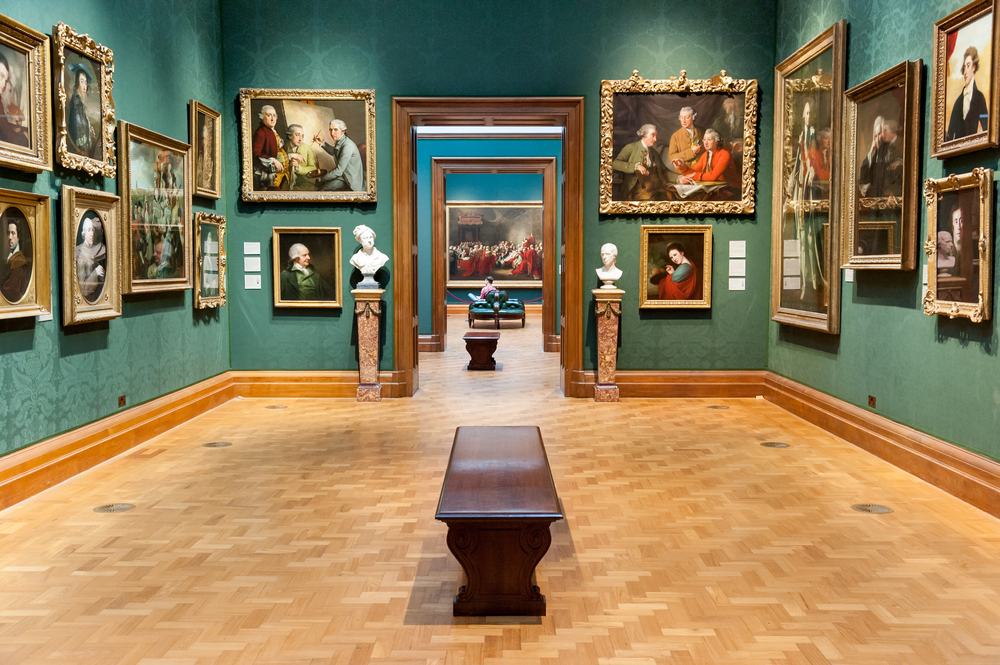

A room adorned with paintings on the walls, exemplifying Floor Sanding for Museums and Art Galleries, ensuring a pristine and protected flooring environment for showcasing artwork.

Museum & Art Gallery Floor Sanding and Restoration — Specialist Service for London’s Heritage Spaces

Restoring a museum or art gallery floor isn’t quite the same job as sanding the boards in a Victorian terrace, and we know that better than most. In our 31 years on the tools, we’ve worked everywhere from private collections in Mayfair townhouses to public galleries in central London — and we’ve learned that these spaces demand a different level of care, planning and discretion. At Mr Sander®, we provide specialist museum and gallery floor sanding, cleaning and restoration services tailored to the genuine, real-world challenges of these buildings: irreplaceable artworks just metres away, climate-controlled environments that mustn’t be compromised, and footfall that ranges from quiet weekday mornings to crowded private views.

Anyone who walks into a gallery is, by definition, paying attention to detail. They notice the lighting, the spacing of the works, the acoustic of the room — and yes, they notice the floor. A scratched, dull, patchy floor undermines the entire viewing experience, however carefully curated the exhibition. Our 98% dust-free sanding systems — among the cleanest setups in the UK industry — mean we can restore those floors without putting a single grain of dust near your collection, and our team have the practical experience to plan the work properly around your opening hours and exhibition schedule.

Gallery and museum floors take a serious beating, too. Hundreds of visitors a day, school groups with rucksacks, art handlers wheeling crated works on dollies, plinths being repositioned every few weeks for new hangs — it all adds up. That’s why we only ever use commercial-grade sealants and finishes on these jobs, the kind of products designed for genuine high-traffic public buildings rather than the softer domestic finishes you’ll find in DIY stores.

The single most important factor in this kind of work, though, is dust containment. We’ve seen what poorly executed sanding can do to a gallery’s air handling system, to delicate framed works, to silk drapery and to varnished antique furniture in the periphery. Our extraction systems capture 98% of the dust at source — and the small remaining percentage is contained within strict zonal barriers that we set up before a single belt sander touches the floor. Combined with low-VOC, water-based finishes, the impact on the wider building is genuinely minimal.

If you’re responsible for a museum, gallery, exhibition space or private collection and the floors are starting to let the rest of the building down, we’d be glad to come and have a look. Mr Sander® brings 31 years of restoration experience, over 25,000 floors completed across the UK, more than 1,000 verified 5-star reviews (averaging 4.8/5), full insurance and a written 5-year workmanship guarantee to every project — exactly the credentials your trustees, building manager or curator will want to see on a contractor’s submission.

A spacious room showcasing artwork displayed on the walls, highlighting the importance of professional floor sanding and finishing to preserve and complement the overall aesthetic.

Our Dust-Free Floor Sanding Process — Step by Step

There’s no shortcut to a properly restored gallery floor. The work has to be done in the right order, with the right kit, by people who genuinely understand what they’re doing — particularly in a building where the consequences of getting it wrong are far more serious than scratched skirting boards. Here’s exactly how we approach a museum or art gallery floor restoration from first phone call through to handover.

1. Site Survey and Honest Assessment

  • Detailed inspection: One of our senior technicians walks the building with you, identifies the timber species and original finish, checks for moisture issues, splits, cupping, lifting blocks and structural movement, and notes any heritage or conservation considerations that affect the approach.
  • Honest consultation: We discuss your operating calendar, exhibition schedule, climate-control requirements, and the realistic options available. If your floor only needs a recoat and screen rather than a full sand, we’ll tell you straight — we’d rather quote you correctly the first time than overspecify the job.

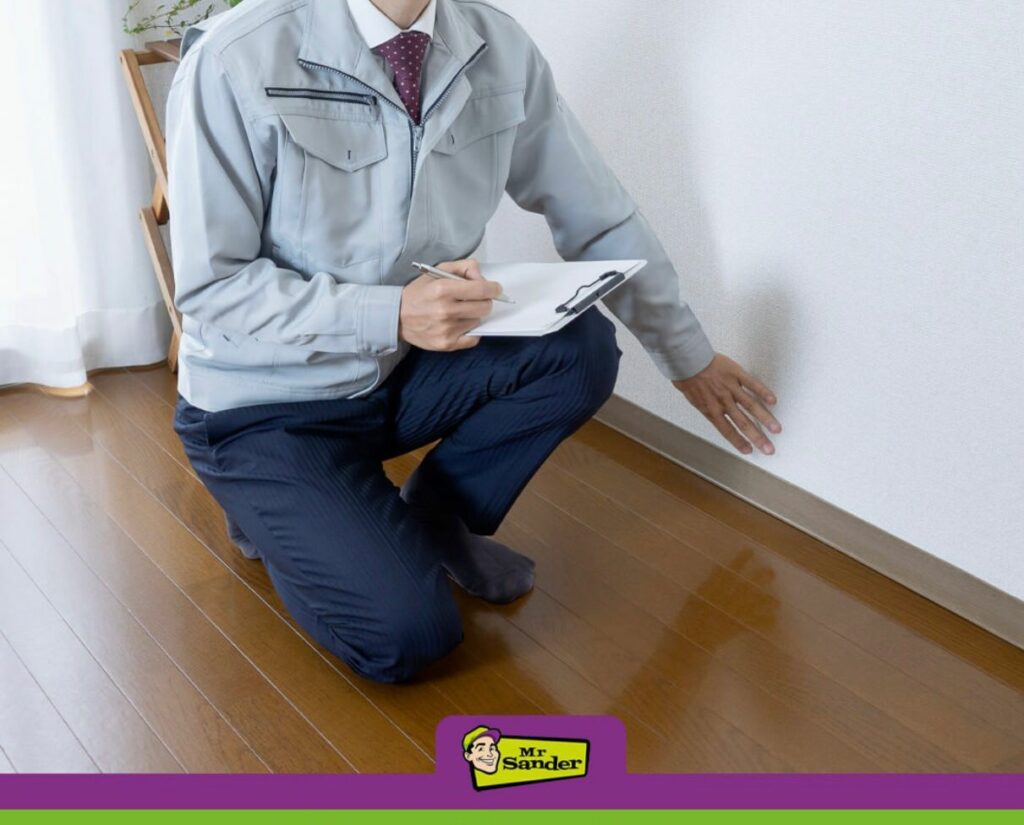
A professional floor inspector in smart attire kneeling down to carefully examine a wooden floor, assessing its condition for potential sanding and refinishing.

2. Preparation and Site Protection

  • Clearance: We work with your installation team to lift plinths, vitrines and movable display cases. Larger or fragile pieces stay exactly where they are and we work around them — every member of our team is DBS-vetted and properly briefed on conduct around artworks.
  • Zonal containment: Heavy-duty dust barriers are erected at every doorway leading off the work area, with separate negative-pressure zones where needed. Walls, skirtings, mouldings and any nearby framed works are fully sheeted and taped.
  • Floor cleaning: We hoover and tack-off the floor properly before the sanders come out, so we’re working on a clean surface from the start — sounds obvious, but plenty of contractors skip this stage and live to regret it.

3. Dust-Free Floor Sanding

  • Coarse grit pass: Using commercial-grade Bona belt and edge sanders connected to high-efficiency dust extraction units, we strip back the old finish, level out cupping and dips, and remove the worst of the surface damage.
  • Medium grit pass: A finer grit removes the scratches left by the coarse stage and continues to flatten the surface evenly. This is where the natural depth of the timber starts to come through.
  • Fine grit pass: A 120-grit final cut prepares the floor for finishing. The edges, corners and tight spots around columns or built-in plinths are detail-sanded by hand to keep everything consistent.

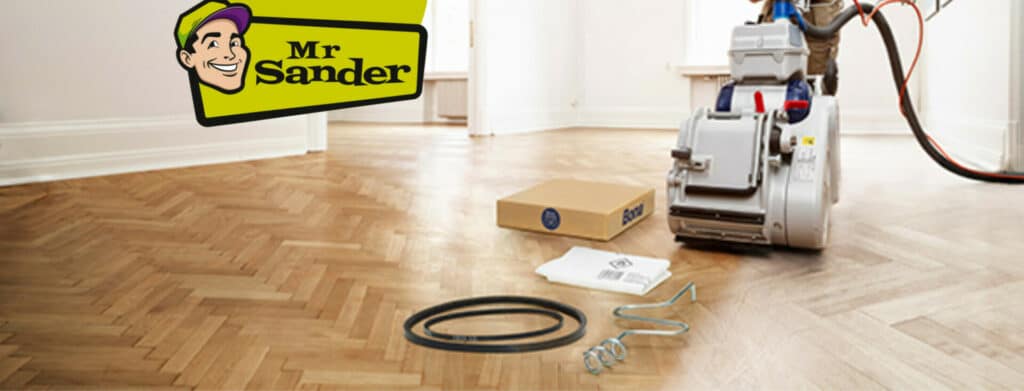
A belt sander and a box placed on a wooden floor, illustrating the preparation process for Museum Floor Sanding project.

4. Thorough Dust Removal

  • Industrial vacuuming: Heavy-duty HEPA-grade vacuums lift every speck of residual dust from board joints, beading and corners.
  • Tack-off: A final tack cloth pass removes the last fine particles before any finish is applied. Skip this stage and you’ll see every grit speck trapped under the lacquer for the next decade.

5. Oiling and Sealing

  • Hard-wax oiling: Where the brief calls for a natural, matt look that lets the timber breathe — common in heritage galleries and listed museum spaces — we apply premium hard-wax oil that penetrates the wood, enhances grain and colour, and provides genuine long-term protection from within.
  • Commercial-grade sealing: For high-footfall public spaces we usually recommend a water-based commercial lacquer — matt, satin, semi-gloss or gloss depending on the building — applied in multiple coats with full inter-coat sanding. These finishes will easily handle 200,000+ visitors a year without wearing through.

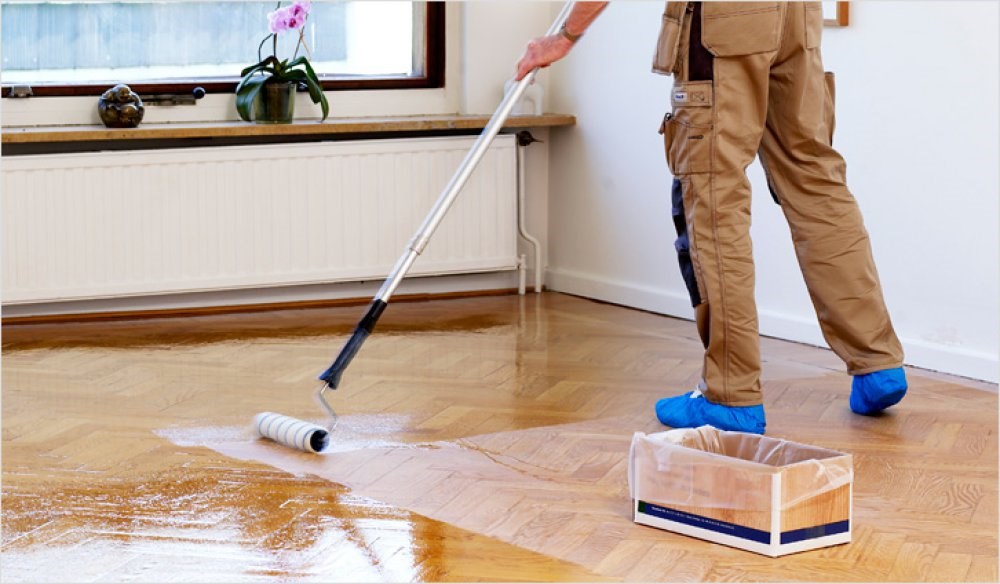
a man painting a wooden floor

6. Final Buffing and Inspection

  • Buffing: Once the final coat has properly cured, we buff the floor to an even, consistent sheen and lift off any small surface imperfections.
  • Walkthrough inspection: A senior technician walks every square metre of the floor with your facilities or operations manager, under good lighting, before sign-off. No shortcuts, no glossing over imperfections.

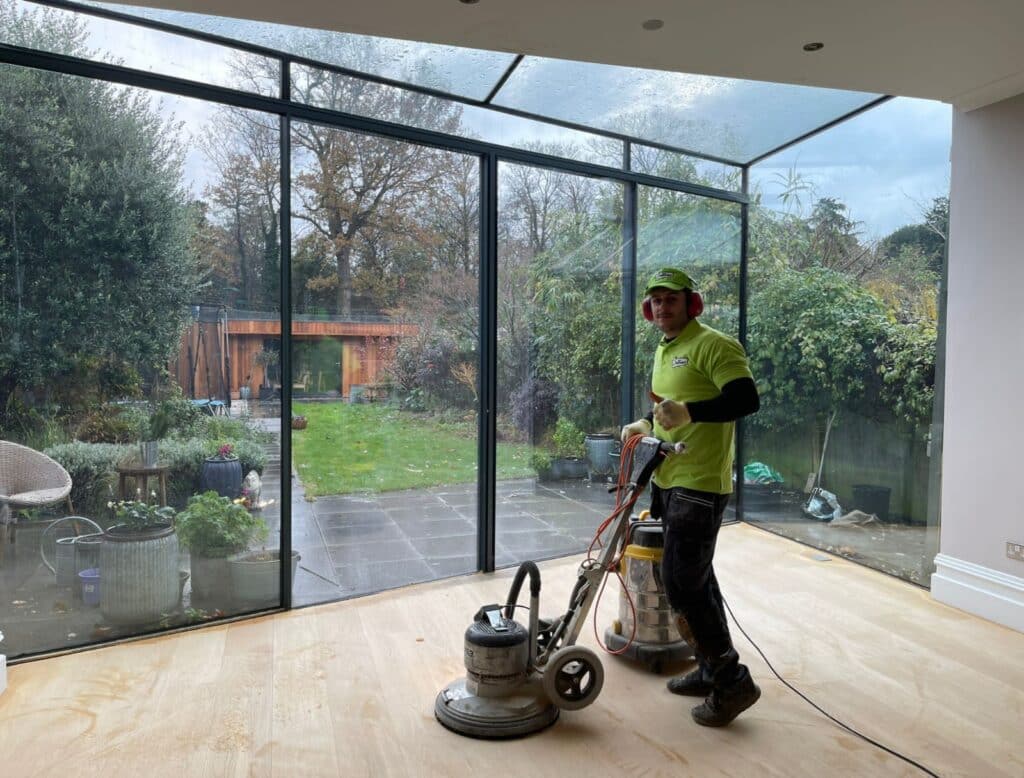
A person in bright lime green shirt, black pants, and a matching green cap stands holding a floor sander in a spacious room with a large panoramic window overlooking a garden. The garden is lush with a variety of plants, shrubs, and trees, and features a wooden structure in the background, possibly a shed or studio. There is a glass ceiling above, and it's a cloudy day outside. The hardwood floor inside shows signs of being freshly sanded, with the sander connected to an industrial vacuum to minimize dust. The person is looking towards the camera with a slight smile, appearing proud of the work being done. The interior is bright and airy, illuminated by the natural light from the expansive windows.

7. Post-Service Care and Long-Term Support

  • Aftercare guidance: Written instructions for your cleaning team — recommended pH-neutral products, mop and pad guidance, how to deal with the inevitable spilt coffee from the gallery café, and how to spot the early signs that a maintenance recoat is due.
  • 5-year workmanship guarantee: Our written guarantee covers our restoration work in full. If anything’s not right within the guarantee period, we come back and put it right. We’re also at the end of the phone for ad-hoc advice long after the invoice is paid.

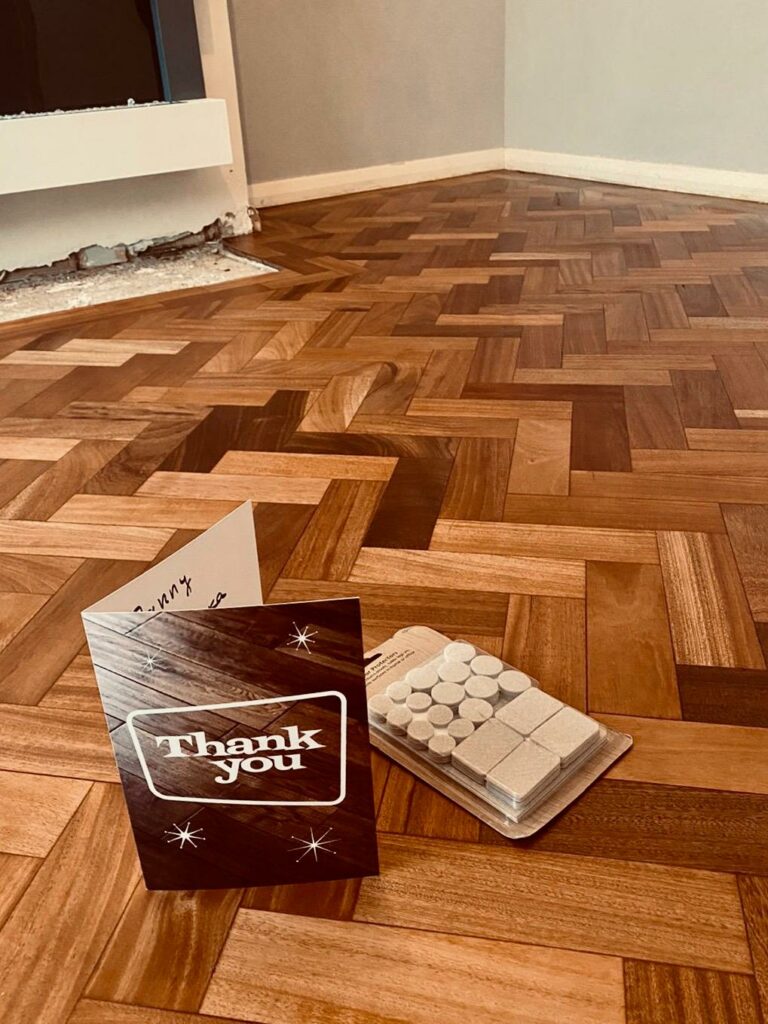
a wood floor with a thank you card and a pack of white pills

Why Professional Sanding and Oiling Genuinely Pays Off

A proper sand and oil isn’t just a cosmetic exercise — it’s the single most cost-effective way to extend the working life of a museum or gallery floor and keep the building looking the way your visitors expect it to. Here’s what you’re actually paying for when you bring us in to do this work properly.

1. The Look of the Building Returns

  • Original timber back in view: Years of grime, scuffs and worn varnish come away, revealing the depth of grain and natural colour the floor was originally chosen for. The oil or sealant then enhances rather than hides what’s underneath.
  • An even, consistent surface: Scratches, scuff marks and worn footpaths through the busiest galleries all get sanded out. No more obvious wear patterns where every visitor naturally walks.

2. Genuine Long-Term Protection

  • Protection from within: Hard-wax oils penetrate the timber rather than sitting on top, building genuine resistance to moisture, accidental spills and the occasional gallery café incident.
  • Wear resistance built for the workload: Commercial-grade finishes are formulated for serious public footfall — they’ll easily cope with 200,000+ visitors a year between full restorations.

3. Cleaner Indoor Air for Visitors and Collections

  • Sealed against dust ingress: A properly sanded and sealed floor stops trapping dust deep in the grain and joints — exactly what museum air-handling teams want to hear. Combined with our 98% dust-free sanding process, you get a measurably cleaner working environment.

4. A Sensible Long-Term Maintenance Strategy

  • Far cheaper than replacement: Sanding and refinishing typically costs a fraction of what you’d pay to take up and re-lay an original floor — and the result is honestly just as good when the underlying boards are sound.
  • Easier housekeeping: A properly sealed floor mops cleanly, doesn’t trap dirt in board gaps, and gives your cleaning team a much easier time of it day-to-day.

5. The Environmental Side of Things

  • Low-VOC finishes: Most of the oils and sealants we use today are water-based or naturally derived, with far lower solvent content than the old polyurethanes — better for visitors, staff, conservators and the building’s air quality.
  • Preserving rather than replacing: By restoring original timber rather than ripping it out, we’re keeping perfectly good wood in service — which is rather the point of conservation, after all.

6. Finishes Tailored to the Space

  • Right sheen for the room: Matt for galleries where you don’t want light bouncing off the floor and competing with the works. Satin or semi-gloss for entrance halls and circulation spaces where a touch of sheen lifts the space.
  • Subtle colour adjustment: Where the original timber has aged unevenly — common in heritage buildings — we can use tinted oils to bring tonal consistency back without losing character.

7. The Building Back in Use Quickly

  • Fast cure times: Modern water-based finishes cure faster than the old solvent-based products. Most museum and gallery floors we restore are walkable within 24 hours of the final coat going on, and back in full visitor use within 48–72 hours.

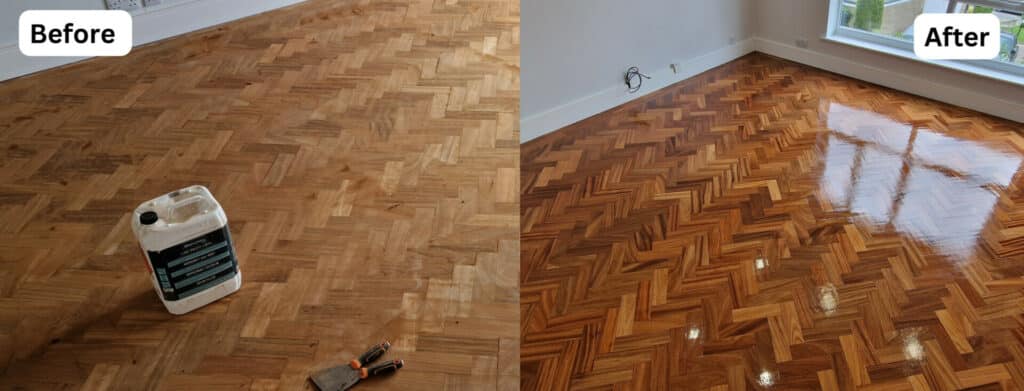
a wood floor with a wood floor and a wood floor with a wood floor and a wood floor with a wood floor and a wood floor with a wood floor and a wood floor with a wood floor

Every Type of Timber — We’ve Sanded It in a Museum or Gallery Somewhere

Different timbers behave differently under the sander, and after three decades on the tools we know how to read each one — which grit progression to use, how the wood will take stain, which finish brings out the best of the grain. Below are the species we most commonly work with in London’s galleries and museums, from grand oak parquet in heritage buildings to engineered hardwoods in contemporary purpose-built exhibition spaces.

  • Oak — by far the most common, particularly herringbone and block parquet in Victorian and Edwardian gallery buildings.
  • Walnut — typically found in higher-end private galleries and members’ rooms; takes oil beautifully.
  • Maple — light, hardwearing, often used in newer purpose-built museum extensions.
  • Cherry — softer than oak; needs a gentler grit progression to avoid burnishing.
  • Beech — common in mid-twentieth-century buildings; sands evenly and finishes well.
  • Teak — dense and stable; favoured in private collections and high-end gallery floors.
  • Bamboo — increasingly seen in newer, eco-conscious museum projects.
  • Pine — original Victorian and Georgian floorboards still found in countless converted museum buildings.
  • Acacia — durable, distinctive grain, well-suited to high-traffic public areas.
  • Black Walnut — rich, deep colour; needs the right finish to do it justice.
  • Hickory — one of the hardest domestic timbers; demands proper kit and the right grit sequence.

a person standing next to a machine

What Our Museum and Gallery Clients Say


“Professional, discreet and clearly experienced. The team worked overnight around our exhibition schedule, used proper dust containment, and handed back a floor that looked decades younger. Our visitors and trustees noticed immediately.”

Central London Art Gallery — Operations Director
Project: Oak herringbone parquet restoration in main exhibition room

“We were genuinely impressed by how clean the work was. Not a speck of dust anywhere near the collection. Mr Sander®’s team understood exactly what was needed in a museum environment and delivered every promise.”

West London Private Museum — Mrs E. Carter, Curator
Project: Victorian pine board restoration, public galleries

“Three years on, the floor still looks superb and our housekeeping team find it dramatically easier to maintain. Excellent work, fair pricing, and proper aftercare advice. We’ll use them again without hesitation.”

Heritage Exhibition Space, South London — Mr J. Holloway, Facilities Manager
Project: Walnut block parquet restoration with hard-wax oil finish


Museum & Gallery Floor Sanding FAQs

Can you sand a museum or gallery floor without disrupting exhibitions or opening hours?

Yes — and we do it regularly. A significant portion of our gallery work is carried out overnight, on closure days, or in phased sections so part of the building stays open. For smaller museums, we’ll typically aim to complete the restoration during a planned closure window. Our water-based finishes cure quickly, so most spaces are back in visitor use within 48–72 hours of the final coat going on. Tell us your exhibition calendar and we’ll plan around it properly.

How do you protect artworks and collection items during sanding?

Dust containment is the heart of this kind of work. We use 98% dust-free extraction systems on every sander, set up zoned dust barriers around the entire work area, and protect adjacent walls, fixtures and any artworks that can’t be moved. Where required, we’ll also create negative-pressure zones so any residual fine particles can’t escape into wider gallery spaces or affect climate-controlled environments. Our team are DBS-vetted and fully briefed on conduct around valuable items.

What types of museum and gallery floors can you restore?

Pretty much any wooden floor you’ll find in a London museum or gallery. We regularly work on original Victorian and Edwardian oak parquet, herringbone and block parquet, traditional pine floorboards in heritage buildings, modern engineered oak and walnut in newer purpose-built spaces, and harder species like maple, beech and teak. If it’s timber, we’ve almost certainly worked on something similar in a comparable building.

Are your team properly insured and vetted to work in cultural and heritage buildings?

Absolutely — and this matters more in museum and gallery work than almost anywhere else. Every Mr Sander® technician is fully trained, directly employed by us (no marketplace subcontractors), and DBS-vetted as standard. We carry full public liability insurance, provide RAMS for every project, and are happy to attend pre-contract H&S inductions, conservation briefings or trustee meetings before work begins.

Which finish do you recommend for a high-footfall gallery floor?

For most public museum and gallery spaces, we recommend a commercial-grade water-based lacquer in matt or satin — matt being particularly popular because it keeps light bouncing off the floor to a minimum and lets the artworks remain the focus. For heritage buildings or where a more natural look is wanted, hard-wax oil is an excellent alternative, with the added benefit that it can be spot-repaired locally rather than requiring a full re-sand when wear appears in high-traffic spots.

How often should a museum or gallery floor be professionally sanded?

For high-footfall public galleries we typically recommend a full sand and refinish every 8–12 years, with a lighter maintenance recoat (a screen and reseal) every 3–5 years in between. Lower-traffic spaces like archive rooms or private offices can usually go 15–20 years between full sandings. Regular condition surveys catch issues early and prevent the kind of deep damage that drives up restoration costs.

Can you work in Grade-listed and heritage museum buildings?

Yes — a significant portion of our gallery and museum work is in Grade I and Grade II listed buildings. We understand the importance of using reversible methods, preserving original timber wherever possible, and liaising with conservation officers, architects or heritage consultants as required. We’ve never had a methodology rejected by a conservation officer.

How long does a typical gallery floor restoration take?

Honest answer — it depends on floor area, condition, and whether we’re working through the day or overnight. A single exhibition room of 60–100 square metres typically takes 3–4 working days end-to-end. A full museum ground floor might take two or three weeks, often phased in sections. We’ll give you an exact written timeline at survey stage, and we stick to it.

How much does museum and gallery floor sanding cost?

Pricing depends on the floor area, condition, timber species, level of repair work needed, your choice of finish, and any out-of-hours working requirements. As a rule, sanding and refinishing comes in at a fraction of full floor replacement — usually somewhere between 20% and 40% of what you’d pay to strip out and re-lay. Book a free site survey and we’ll provide a fixed written quote with no obligation and no surprises.

Get in Touch

If you’re responsible for the floors in a museum, art gallery, exhibition space or private collection, and you’d like an honest opinion on what they actually need, we’re happy to come and have a look. Free site survey, fixed written quote, full insurance, DBS-vetted team and a 5-year written workmanship guarantee — the kind of credentials your trustees, building manager or curator will want to see on a contractor’s submission. Trust the team that’s been restoring London’s floors since 1994 and has more than 1,000 verified 5-star reviews to show for it.

Bring your museum or gallery floors back to their proper best — request your free site survey or call us on 020 7381 9408

Expert floor sanding team in Erith, DA18: Our skilled professionals are ready to transform your floors. With years of experience and dedication, we provide top-quality services. Step into our office and witness the excellence that awaits you.


Four cheerful customers holding up signs with the Mr. Sander logo and the text 'We give Mr. Sander 5 stars', showing their satisfaction with the service provided.

Check out our amazing customer reviews…