When you hear the word “toothpaste,” visions of sparkling white teeth might flash through your mind. You might picture minty freshness, a sleek tube, or that satisfying squeeze of paste onto a toothbrush. But, let me pose a peculiar question that veers away from gleaming smiles and instead turns to the floor beneath your feet: what does toothpaste do to wood floors?
It sounds absurd at first – like asking what a bicycle has to do with soup. Yet toothpaste, with its seemingly harmless, household ubiquity, has a surprising impact on wood floors. Whether it’s from a dollop that dropped mid-routine or an attempt to try out a DIY hack, you may wonder if your wood floor can withstand a bit of the white paste. Here, we’ll dissect what toothpaste actually does to wood floors, why it’s tempting to use it for stains, and what you should consider before trying it. So, before you dab your floor with a bit of Colgate or Aquafresh, read on to discover what could happen.

Toothpaste: The Secret Ingredient with Unexpected Properties
Toothpaste has been around for centuries, though ancient formulas were more about ground-up shells or charcoal than the minty blends we know today. These days, toothpaste is a clever concoction of mild abrasives, detergents, humectants, and sometimes fluoride. Designed to remove stubborn plaque, freshen breath, and polish teeth without damaging delicate enamel, its ingredients are subtly potent. However, that very potency has led people to wonder: if toothpaste can clean and polish our teeth, could it do the same for household surfaces?
This curiosity isn’t new. Toothpaste has become a staple in DIY cleaning and floor repair tips because of its gentle abrasiveness. It’s often recommended for removing scuffs from shoes, polishing silver, or even clearing up hazy headlight covers. But how does toothpaste’s abrasive quality interact with wood floors, which are far less resilient than car headlights or silverware?

The Chemistry of Toothpaste on Wood
Toothpaste works its magic primarily due to small particles like calcium carbonate, aluminum hydroxide, or silica. These are finely ground to buff surfaces, but they’re also the reason why wood flooring and toothpaste aren’t exactly the best of friends.
Wood floors, especially polished or varnished ones, have a delicate finish. When toothpaste meets wood, a few things can happen:
- Abrasive Scratches: Wood flooring is often coated with a thin layer of polish or varnish, which gives it that beautiful glossy look. Toothpaste’s mild abrasives can easily scratch this finish, leaving tiny marks that diminish the floor’s sheen. While these scratches may be minuscule, they add up over time, creating a dull, matte effect on the floor.
- Residue Buildup: Toothpaste can be sticky. After scrubbing and rinsing, you might notice a residue left behind. This residue can cause the floor to look patchy or attract dirt more easily. If not thoroughly removed, it can dull the wood’s natural shine and even become a dust magnet, making your floor look dirtier than before.
- Moisture Damage: Many toothpastes contain humectants like glycerin to retain moisture. When applied to wood, this moisture can seep into the grain, especially if your floor is unfinished or has minor cracks. Wood is porous and can absorb this moisture, potentially causing swelling or warping over time, particularly if applied repeatedly.

DIY Hacks Gone Wrong: Toothpaste and Wood Floor Stains
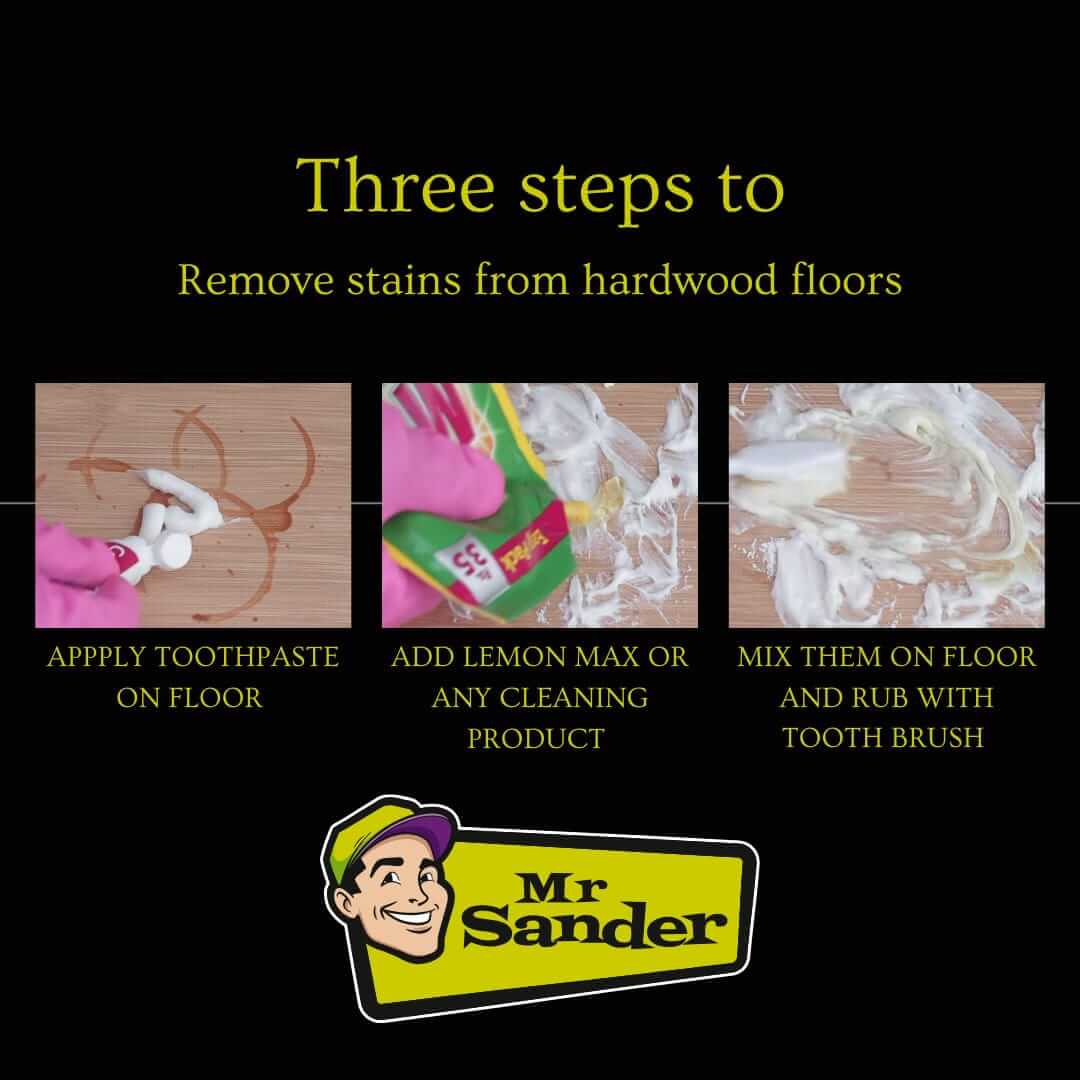
So, why would anyone use toothpaste on a wood floor? In many cases, it’s to deal with stubborn stains or scuffs. Wood floors are notoriously prone to damage from spills, high heels, furniture legs, and everyday wear and tear. And since toothpaste is seen as an inexpensive, household-friendly polish, people might try it to remove minor blemishes.
The idea here is that toothpaste, especially whitening toothpaste, can remove or “bleach out” light stains. Some people swear by it for white ring marks left by water or heat. But be warned – while you might see a quick fix, there’s a chance of long-term damage.
Using toothpaste for spot cleaning stains can work, but it’s risky. Here’s what you should keep in mind:
- Spot Testing Is Essential: Before applying toothpaste to any stained or marked area, do a spot test on an inconspicuous section of the floor. This will show you how the toothpaste reacts with the wood, allowing you to gauge any potential risk to the finish or texture.
- Use a Non-Whitening, Non-Gel Toothpaste: Whitening toothpastes often contain bleaching agents or extra abrasives, which can lighten the wood unevenly or scratch it further. Gel toothpastes, on the other hand, may contain ingredients that leave a tacky residue. Regular, non-gel toothpaste is generally your safest bet.
- Buff Gently: If you decide to go for it, use a soft cloth and a gentle hand. Remember, you’re not scrubbing a pan or polishing metal; a delicate touch is crucial.
- Rinse Thoroughly: After applying toothpaste, make sure you rinse and dry the area properly. Any remaining residue can attract dust and grime, worsening the floor’s appearance over time.
When Toothpaste Might Help
There are instances where a carefully applied dab of toothpaste can make a minor difference without too much damage. A small scratch or a scuff mark may be softened with a tiny bit of toothpaste on a cloth. However, always use a barely-there amount, and don’t make a habit of it. Toothpaste might offer a short-term fix, but repeated applications can lead to dull, scratched wood.
Safer Alternatives to Toothpaste for Wood Floors
For those looking to tidy up or refresh their wood floors without the risk of toothpaste damage, there are several safer alternatives:
- Vinegar and Water: A diluted mixture of vinegar and water can work wonders on many types of stains. Apply a small amount with a soft cloth, wipe gently, and avoid soaking the wood. Just be sure to dry thoroughly afterward to prevent any moisture damage.
- Baking Soda and Olive Oil: Baking soda’s mild abrasiveness, coupled with olive oil’s nourishing properties, can help buff out scuff marks and restore shine. Sprinkle a tiny bit of baking soda, rub gently with a cloth, and then wipe away with a damp cloth followed by a dry one.
- Commercial Wood Floor Cleaners: When in doubt, choose a cleaner specifically designed for wood floors. These products are formulated to clean without damaging the wood, and they can often remove stains more effectively than DIY solutions.
- Polishing with a Microfiber Cloth: Sometimes, all your wood floor needs is a good polish. Use a microfiber cloth to buff the wood and bring back its natural shine without risking damage from abrasive products.
- Wood Oil or Wax: For more extensive restoration, applying wood oil or wax can rejuvenate your floor and cover small scratches. These treatments offer moisture without seeping into the wood, providing a safer, longer-lasting solution than toothpaste.

The Final Verdict: Toothpaste and Wood Floors, Friend or Foe?
Toothpaste and wood floors are, at best, fair-weather friends. While it might seem like an inexpensive and convenient fix, toothpaste’s abrasiveness and potential for moisture damage make it an unreliable choice for wood floor maintenance. Its ability to scrub out minor marks may be appealing, but the risk of scratches, residue, and even discoloration far outweighs the benefits.
In short, if you’re tempted to use toothpaste on your wood floor, proceed with caution – or better yet, try a safer alternative. Toothpaste has its strengths, but helping wood floors isn’t one of them. Keep it where it belongs – in the bathroom, ready to bring out your best smile – and save your wood floors from unintended abrasions and stains.

In Conclusion
So, what does toothpaste do to wood floors? It’s not a miracle worker, nor is it a complete disaster. It’s a risk. Toothpaste might give you a temporary fix, but with the potential to damage the delicate finish, leave a residue, or even contribute to moisture-related problems, it’s often not worth the gamble. Wood floors are an investment, and treating them with care ensures they retain their beauty and resilience over time.
For those who love a quick hack, it’s worth remembering that not all household remedies are equal – some work wonders, while others, like toothpaste on wood, are more trouble than they’re worth. And as always, the best way to care for your wood floors is with products designed specifically for the job. So, if you’ve got a wood floor in need of TLC, reach for a microfiber cloth or a quality wood cleaner, and save the toothpaste for what it does best – keeping your smile bright.